Iron & Steel
Platform Comparison
Open Trading
GlobalOre vs Metalshub for Iron Ore and Raw Material Trading
 Written bySamir Jaber
Published on
Share Post

Iron & Steel
Platform Comparison
Open Trading
Written bySamir Jaber
Published on
Share Post
GlobalOre and Metalshub both give buyers and sellers of physical raw materials a digital place to find a price and close a deal. GlobalOre does this for one commodity: approved mills, miners and traders post firm, anonymous bids and offers for seaborne iron ore and trade under a standard contract, SIOTA.
Metalshub does it across more than 300 raw materials, from iron ore and ferroalloys to scrap, refractories and lithium. Buyers and sellers choose how to trade each product: through tenders, auctions, anonymous termsheet negotiation or, from November 2026, Open Trading, with live bids and offers between approved counterparties. Contracts, compliance and analytics follow in the same system.
In this GlobalOre vs Metalshub comparison, we look at how each platform forms prices, what happens after a deal, and which one fits an iron ore desk, a raw materials team, or a company that needs both.
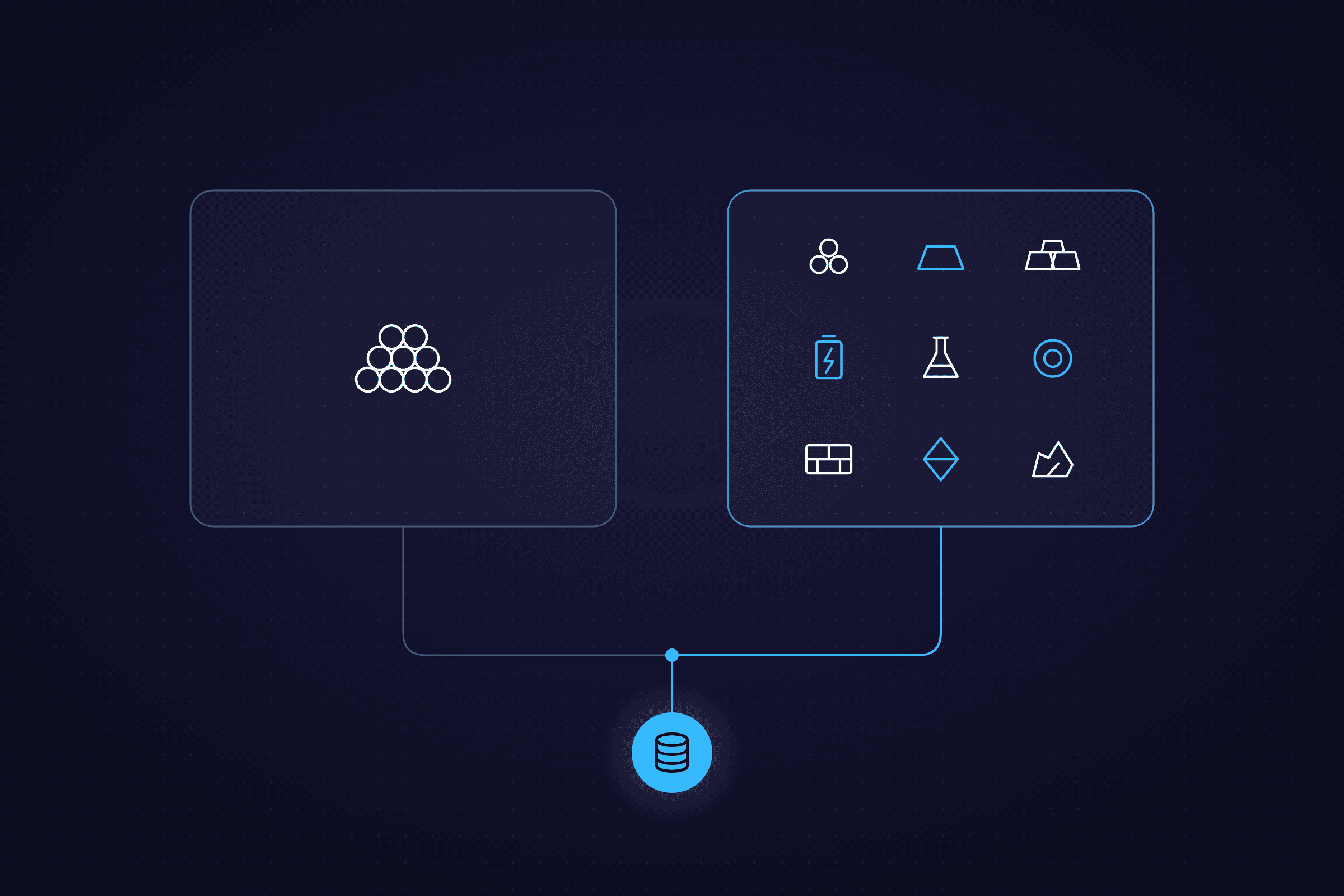
GlobalOre covers iron ore. Metalshub covers more than 300 raw materials on one platform.
Metalshub and GlobalOre overlap in helping raw material buyers and sellers find a fair price and close a deal. The table below shows where the two platforms diverge.
| Metalshub | GlobalOre | |
|---|---|---|
| Platform type | Digital procurement and sales platform with a vetted network | Electronic trading venue |
| Materials covered | 300+ raw materials, including iron ore | Iron ore fines and lump |
| How prices form | Tenders, Bidding Events, auctions, Termsheet Mode and Open Trading (lithium first) | Firm, anonymous bids and offers on screen; invitation-only auctions |
| Contract terms | Company, negotiated or standard Open Trading terms | Standard Iron Ore Trading Agreement (SIOTA) |
| Network | 3,000+ pre-vetted, KYC-checked companies | 70+ members with bilateral approval |
| After the deal | Contracts, call-offs, amendments, inventory | Confirmations, documents and settlement tracking; paperless post-trade in pilot |
| ERP connection | API integration, including SAP | Not described publicly |
| Carbon data | CO₂ and CBAM data captured with offers | Outside scope |
| AI | Metalshub AI and Metalshub MCP | Not described publicly |
GlobalOre is a Singapore-based electronic marketplace for physical iron ore. It went live in May 2012, founded by seven industry shareholders: Baosteel, BHP, China Minmetals, Glencore, Rio Tinto, Vale and Valin Steel. BHP announced the project in 2011, modelled on the ownership structure of globalCOAL, the marketplace for physical thermal coal.
GlobalOre runs a members-only screen market for physical iron ore.
GlobalOre now reports more than 70 member mills, traders and miners. Here’s how it works:
Members trade seaborne fines and lump on a CFR China basis, plus portside cargoes in RMB and bonded USD, at fixed prices or against an index. Members can also run invitation-only forward and reverse auctions for single cargoes. GlobalOre runs KYC and anti-money laundering checks when onboarding members and monitors its market for distortion.
Every quote on GlobalOre can be executed, so the screen shows what buyers and sellers will actually commit to. That has made platforms like it central to the spot market. In a 2014 investor briefing, BHP reported that platform sales made up about half of all reported iron ore spot transactions for six straight quarters.
By 2020, Platts data showed that about two-thirds of spot trades went through broker screens such as GlobalOre. Price reporting agencies draw directly on this activity, and Fastmarkets uses GlobalOre trades and offers in its iron ore index calculations.
Metalshub is a digital platform for buying, selling and trading physical raw materials. It serves the metals, mining and recycling industry, and more than 3,000 companies use it. Metalshub does not buy or sell material itself. It provides the platform and the network where buyers and sellers do business.
Metalshub is a platform for buying, selling and trading physical raw materials.
Based in Düsseldorf, the company was founded in 2016 by Dr Frank Jackel and Dr Sebastian Kreft. Both previously ran sales at Anglo American, in ferroalloys and nickel. There, they saw how much raw material trading still relied on phone, email and spreadsheets. Metalshub’s iron & steel range alone includes iron ore, coking coal, coke, scrap, pig iron, alloys, fluxes, refractories and electrodes.
Three products sit on the same data foundation:
For example, RHI Magnesita has executed more than €400 million of procurement on Metalshub and reports a 2x return on investment. On the sell side, Hindalco has partnered with Metalshub to run digital tenders for metallurgical-grade alumina, and the first tender takes place between October and December 2026.
“By implementing digital tenders for certain spot sales, we aim to broaden market participation, strengthen competitive price discovery and bring greater efficiency and transparency to the alumina market.”
Every enquiry, offer and contract on Metalshub is stored as structured data, and the platform’s AI tools build on it. Metalshub AI reads trade messages that arrive outside the platform, such as an emailed specification or a counter-offer, and turns them into structured enquiries and offers through Text2Platform. Metalshub MCP works in the other direction: it lets a company’s own assistant, such as Claude, ChatGPT or Copilot, query live Metalshub records to summarise spend, shortlist counterparties or draft a counter-offer, with human approval before anything is sent.
The two platforms differ most on four points: which materials they cover, how prices form, what happens after a deal, and how each approaches standardised markets.
GlobalOre’s depth in iron ore shows in its contract. The full SIOTA covers seaborne cargoes delivered into China, and a lighter version governs portside RMB and bonded-warehouse trades. Brands, qualities and delivery windows are defined in advance, so a Pilbara Blend cargo means the same thing to every member.
A steel producer’s purchasing list runs much longer. Integrated mills also buy coking coal, fluxes, alloys and electrodes, and stainless producers source ferrochrome, nickel and molybdenum under long-term contracts with many optional terms. Metalshub handles each material with its own specifications and multi-element pricing, so pig iron and molybdenum can run through the same buying process. The same holds for industrial minerals, copper and aluminium.
On GlobalOre, price discovery runs continuously through the trading day. Firm orders sit on screen, eligible counterparties can hit them instantly, and each bid, offer and trade becomes a timestamped data point.
For seaborne iron ore spot trading, GlobalOre is the established venue. The world’s largest producers and buyers already trade there, on standard terms the whole market understands.
Metalshub builds price discovery around structured events. A seller can put a lot up for auction, and a buyer can run a tender across several plants and grades. Seaborne iron ore can trade on one standard contract. Most raw materials still arrive with different currencies, Incoterms, payment terms and chemistry, so Metalshub normalises every offer into a like-for-like comparison and buyers award on delivered cost.
Brazilian lithium producer CBL used a Metalshub bidding event in 2025 to open its first digital sales channel, inviting existing customers alongside new buyers from the Metalshub network. Its first bidding round led to a trial shipment with a Chinese buyer CBL had never worked with before.
“Metalshub lets us launch multi‑plant tenders in minutes, compare normalized landed costs in minutes and capture every decision with version‑controlled documentation. We onboard new entities faster and keep governance tight across regions.”
GlobalOre vets members at onboarding, monitors its market and tracks trade confirmations, documents and settlement, with a paperless post-trade workflow in pilot. It does not publicly describe contract management, inventory tracking or ERP integration, so those steps continue in each member’s own systems.
Metalshub treats the agreed price as the start of the record. Contract management holds framework agreements and call-offs; each negotiation round is stored for audit, and CO₂ and CBAM data is captured with each offer.
Data and analytics dashboards on Metalshub track savings, supplier performance and price variance against the market, using the same structured sourcing data buyers create in each tender.
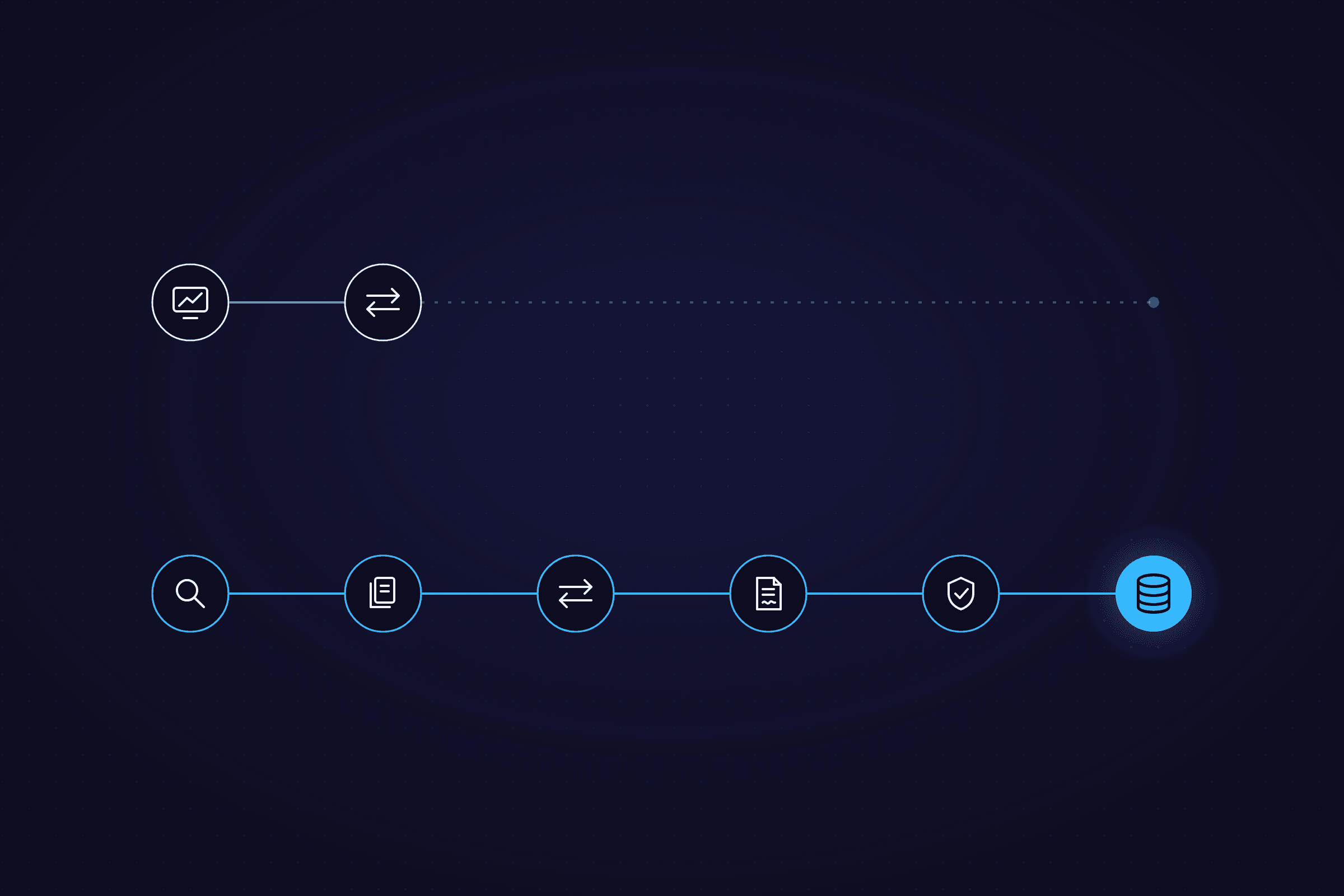
Price discovery and execution sit at the start of a longer chain that runs through contracts, compliance and data.
“It makes sense to use a tool to create transparency, to have all data in one place. It makes audits much easier when the data does not have to be extracted from email inboxes. I can’t imagine why any steel mill would not use a procurement solution.”</em></p><cite>— Manuel Freier-Nostheide, Commodity Manager, GMH Gruppe”It makes sense to use a tool to create transparency, to have all data in one place. It makes audits much easier when the data does not have to be extracted from email inboxes. I can’t imagine why any steel mill would not use a procurement solution.”
GlobalOre is a privately run, members-only market for seaborne iron ore, built on standard contracts and grades. It showed that this model can work for a physical commodity, with four elements: verified members, bilaterally approved counterparties, a standard contract, and anonymous, binding quotes. Coal trading on globalCOAL rests on the same foundations.
Lithium is one of the next markets asking for that structure. In a 2024 Fastmarkets interview, Liontown’s chief executive Tony Ottaviano called for a transaction-based lithium pricing platform modelled on the iron ore platforms GlobalOre and Corex, noting that “iron ore, coal, liquified natural gas have all undergone this pricing transition.”
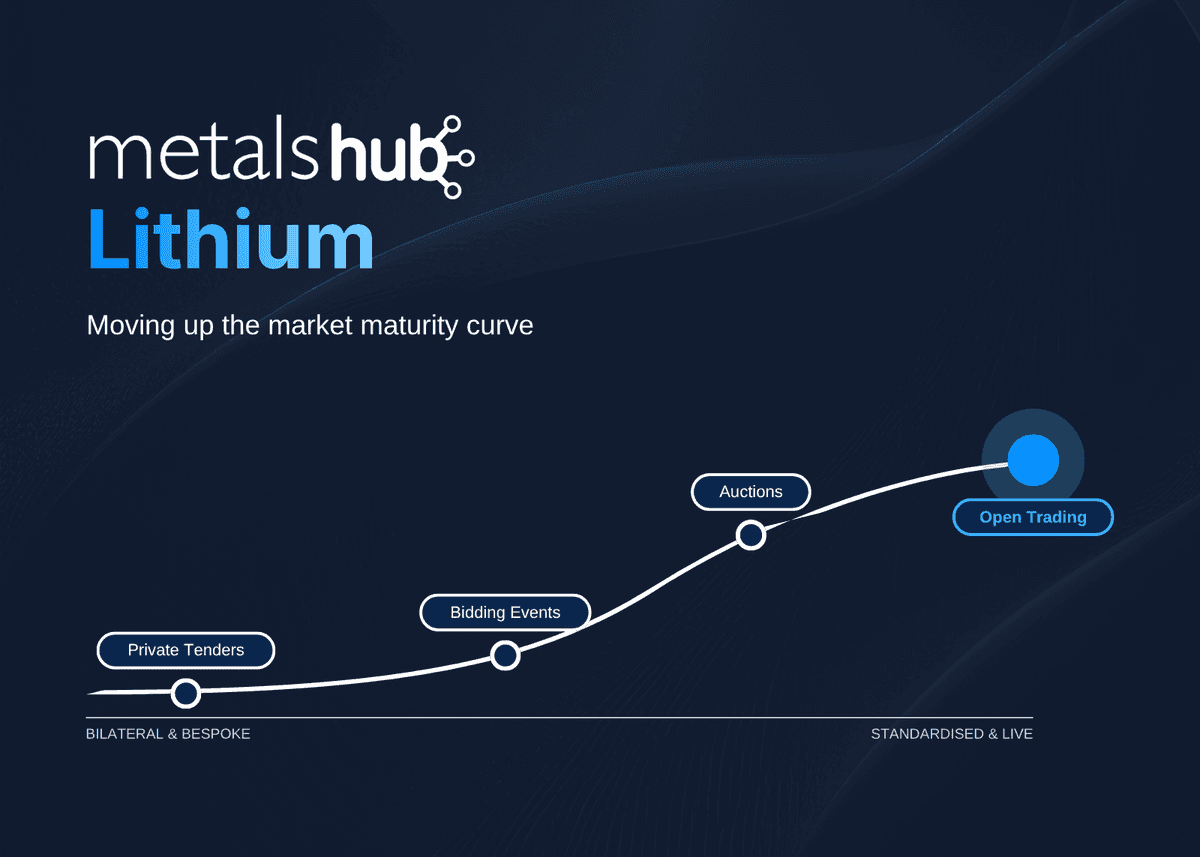
Metalshub Open Trading applies the same principles of firm, anonymous trading between approved counterparties to raw materials beyond iron ore, starting with physical lithium in November 2026:

On Open Trading, a trade completes only between companies that have approved each other.
What sets Open Trading apart is where it sits. It is one of several trading modes on Metalshub, beside Private Tenders, Public Tenders and Bidding Events, Termsheet Mode and auctions, so each company can pick the mode that fits each product and each deal. A lithium producer might renew a contracted volume through a Private Tender, sell a spot lot through a Bidding Event and post spodumene concentrate on Open Trading in the same month, without onboarding counterparties again.
A lithium trade closed in Open Trading lands in the same system as a company’s tenders, contracts, compliance records and analytics, and Metalshub plans to extend the model to other raw materials, as their markets standardise.
Both platforms serve experienced raw material traders. The better fit depends on how many materials a team handles and how much of each deal it wants in one place.
“Bringing in Metalshub gave us the visibility we needed and helped us to make more strategic purchases. On a group level, it also enabled us to create a central purchasing unit.”
Many companies trade iron ore and still buy dozens of other raw materials. An integrated mill can secure spot iron ore cargoes on GlobalOre and run its ferroalloy, scrap and refractory tenders on Metalshub. A diversified miner can sell iron ore on GlobalOre and sell by-products or battery materials through the Metalshub Sales Solution, and lithium on Open Trading. The two platforms do not compete for the same workflow.
Request a demo to explore how Metalshub brings raw material deals, from first enquiry to executed contract, into one auditable platform.
METALSHUBTALKS 016
Join Dr Frank Jackel on 12 November as he walks us through Metalshub’s all-new Open Trading mode for physical raw materials.
GlobalOre launched in 2012, founded by Baosteel, BHP, China Minmetals, Glencore, Rio Tinto, Vale and Valin Steel. Based in Singapore, it describes itself as a neutral marketplace built by the iron ore industry for its own members.
The best GlobalOre alternative depends on what a company needs. Other screen-based iron ore platforms, such as Corex, run a similar bilateral spot-execution model. For companies trading more than iron ore, or needing tenders, contracts and compliance in one system, Metalshub covers procurement and sales across more than 300 raw materials, including iron ore, and its Open Trading mode brings the same standardised-market model to lithium.
Companies join GlobalOre by signing a membership agreement and completing KYC and anti-money laundering onboarding checks. Members can register trading accounts for staff who execute deals and view-only accounts for staff who monitor the market. Each member keeps its own list of approved counterparties and is responsible for its own due diligence. GlobalOre charges annual membership fees, fees for additional accounts and a commission per tonne traded.
No. GlobalOre is a market for physical iron ore only. Members must trade as principals for their own account and settle every transaction through physical delivery. They cannot trade on behalf of retail investors or any other third party, which keeps the screen focused on companies that produce, consume or physically trade iron ore.
Yes. Metalshub Open Trading goes live for lithium in November 2026. Participants post firm bids and offers for battery-grade lithium carbonate, technical-grade lithium carbonate and spodumene concentrate, see every live order anonymously, and trade on standard terms only with counterparties they have approved. Further raw materials will follow, and Open Trading sits beside tenders, auctions and Termsheet Mode on the same platform. Dr Frank Jackel explains how it works in MetalshubTalks 016 on 12 November.
Yes. The two platforms cover different parts of a raw materials business. An integrated steel mill can buy spot iron ore cargoes on GlobalOre and run its ferroalloy, scrap and refractory tenders on Metalshub. A diversified miner can sell iron ore on GlobalOre and sell by-products, battery materials or lithium on Metalshub.
Newsletter