Battery Raw Materials
Open Trading
Why Raw Material Trading Requires Multiple Modes
 Written bySamir Jaber
Published on
Share Post
Battery Raw Materials
Open Trading
Written bySamir Jaber
Published on
Share Post
Raw material markets do not operate on a single trading standard. Ask a scrap and a coal trader how they’d design the perfect trading platform, and you’ll get two different answers. The markets for their respective raw materials are not at the same stage of maturity, and designing a uniform sourcing process for all forces buyers and sellers into inefficient workflows.
Commodity maturity, defined by spec standardisation, number of counterparties, and price visibility, dictates the optimal trading mode. A more mature or liquid market can support more competition, more discoveries, and more openness. Forcing that open model on a market before it’s ready may cause liquidity to dry up instead of grow.
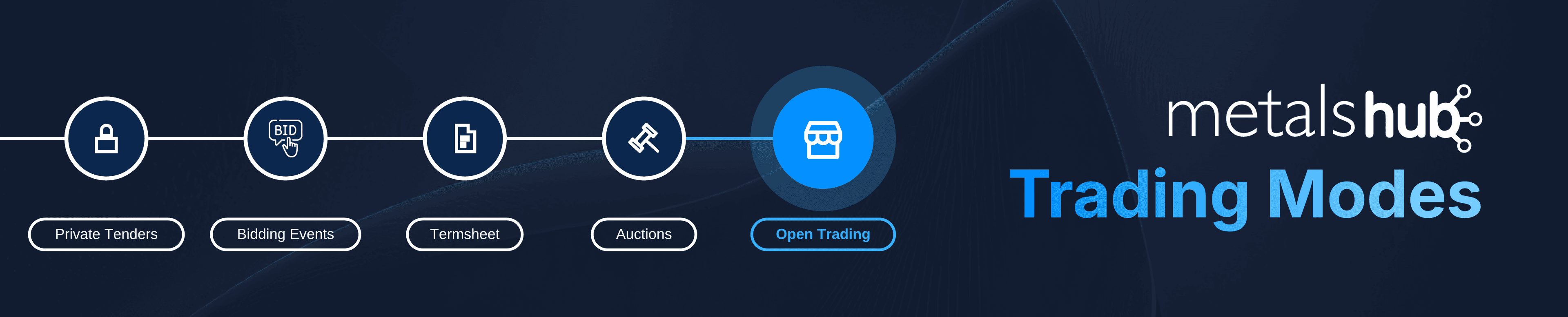
That’s why Metalshub provides buyers and sellers with the architecture to execute across different trading modes and the flexibility to pick the right one for each material, each enquiry, and any market condition, all on a single platform.
Live Webinar
Dr. Frank Jackel explains how Metalshub’s all-new Open Trading works and what participants can expect in the first months of trading.
At early maturity stages, specs vary from one consumer to the next, counterparties are all well known to each other, and signalling intent to the wider market may do more harm than good. Private Tenders maintain total commercial control through one-to-one or one-to-many negotiations without broadcasting intent to the broader market.
Take scrap, for example. Grades, contamination levels, and logistics differ by load. Some say you must first see the scrap in person before concluding any deal. Sourcing runs on trust and long-formed personal relationships rather than formal contracts, which is exactly what Private Tenders are built to handle.

As a market matures, counterparty discovery starts to pay off, and competitive bidding starts to improve outcomes; however, specifications and terms remain negotiable instead of having a standard framework. Public Tenders and bidding events open the field for more counterparty discovery and expand the bidding pool, while specs and terms stay flexible enough to fit the material.
This is also where true price discovery starts taking shape. Many of these markets are opaque or run on thin spot liquidity with few reliable reference prices. Public Tenders can be the much-needed solution for proper price discovery.
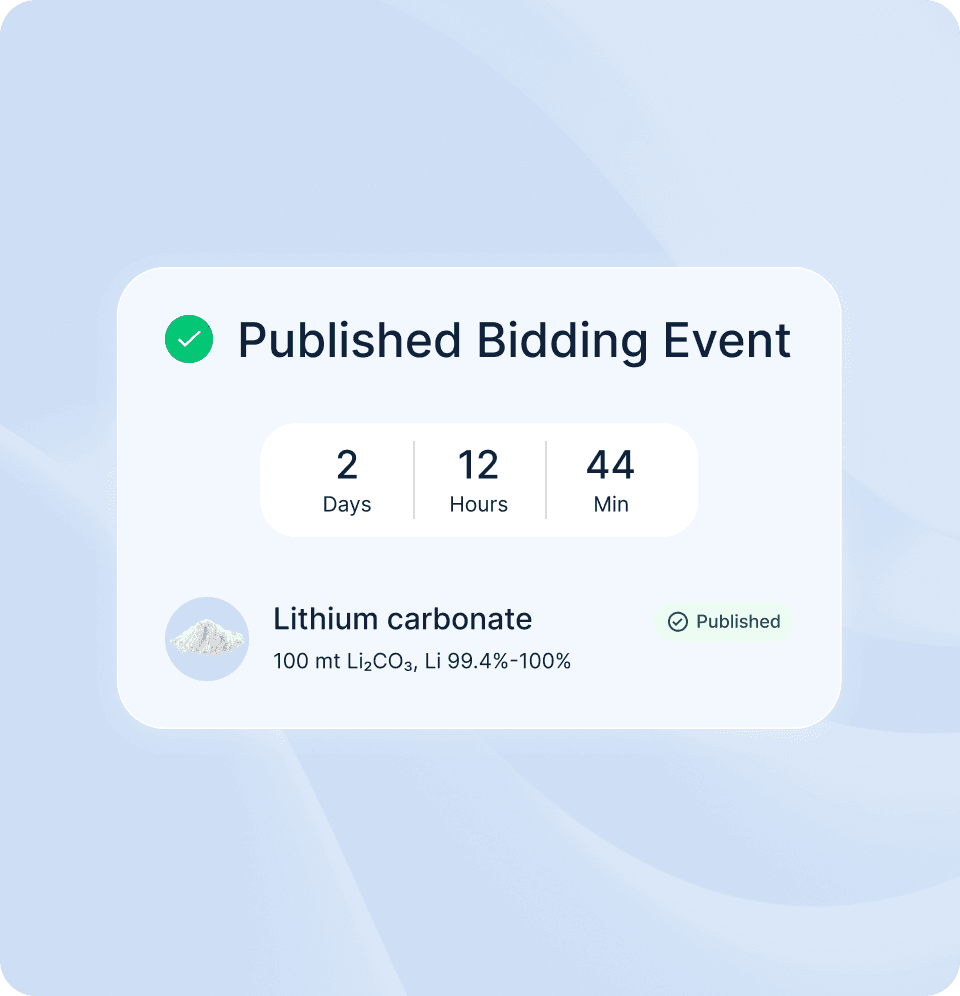
For instance, pricing in the lithium market has long been negotiated privately and bilaterally, shrouded in confidentiality, and varied widely based on end-use applications. “One of the biggest issues facing the growth of the lithium industry is the opacity of price,” said Joe Lowry, president of Global Lithium LLC. “It’s been a problem since I entered the industry. People have never liked the fact that, unlike other metals they might be involved with, it was very hard to know what the lithium price was, is or will be.” This is why several lithium producers have chosen to run public bidding events on Metalshub. Through competitive and transparent bidding, fair pricing emerges, and new counterparties can be discovered.
Read more on Bidding Events in Lithium here.
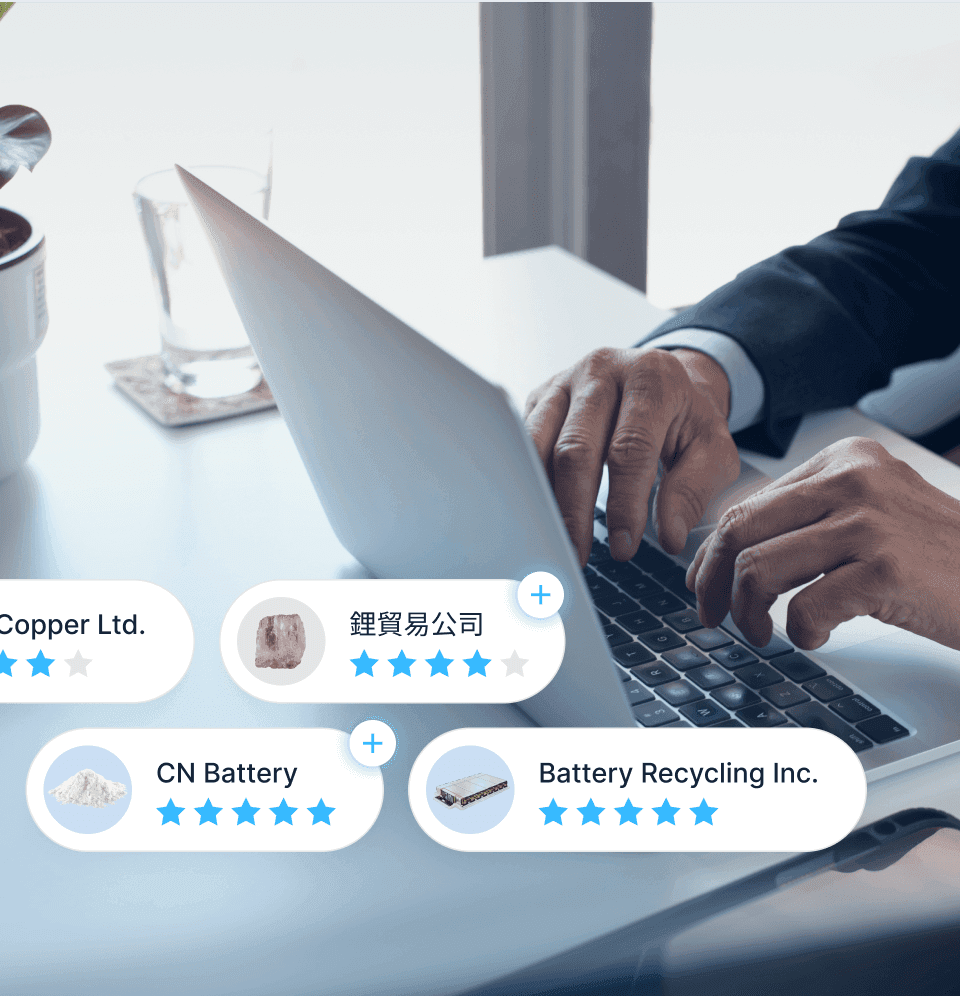
Termsheet Mode enables participants to negotiate non-binding terms anonymously until final counterparty reveal.
Running anonymised termsheet tenders on Metalshub allows physical traders to instantly tap into broad digital liquidity without revealing their commercial position or triggering adverse market movements. Metalshub’s platform provides reliable, real-time price discovery on physical premiums by exposing the deal to a global pool of pre-vetted counterparties. Ultimately, it gives traders the speed, auditability, and reach of a modern digital workflow without sacrificing the operational secrecy vital to their competitive edge.
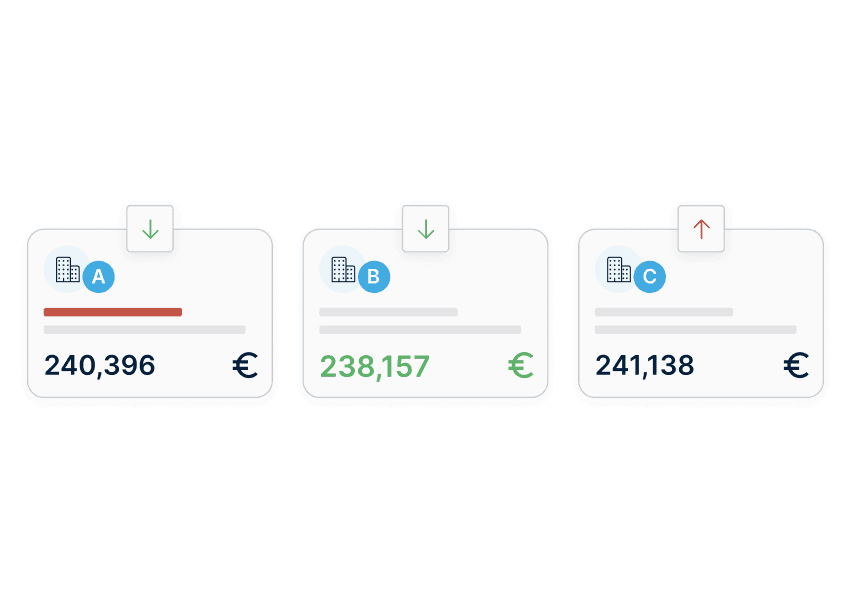
Auctions add competitive bidding on top of counterparty discovery—the natural next stage in market maturity. By defining product specifications upfront, buyers and sellers strip away friction and force counterparties to compete strictly on price.
This transparent, live-bidding environment drives dynamic competition without time-consuming, multi-variable negotiation.
The prerequisites for this are twofold:
Fully mature markets support what commodities exchanges have always relied on: live, anonymous order book execution. Open Trading mode displays live bids and offers across pre-vetted counterparty networks to maximise execution speed and price discovery.
Governed by standardised trading terms (co-developed and regularly revised) and commodity grades, Metalshub ensures complete operational consistency and efficiency for buyers and sellers alike.
Because participants pre-approve counterparties prior to entering the market, either side can instantly accept quotes with minimal execution risk. Upon trade completion, transaction prices are anonymously broadcast to the network, delivering real-time benchmark transparency while fully protecting individual commercial interests.
Coal is a good example, traded openly through a platform like GlobalCoal. Agreement among the key players on standard specs and trading terms (see SCoTA) turned coal into a liquid, transparent market driven by instant execution.
Metalshub has recently launched Open Trading on the platform, which means Metalshub now offers a trading mode for raw materials at every stage of market maturity.
Metalshub Open Trading Announcement Video
A lithium desk might run a Bidding Event for one cargo and use the Open Trading for another in the same week. Maturity isn’t uniform across a portfolio, so the platform underneath it can’t be either.
That’s the case for building all modes into one platform. Metalshub gives procurement, sales and trading teams the flexibility to choose the right mode material by material, without switching platforms, re-onboarding counterparties, or reformatting data every time a market moves up the maturity curve.
Metalshub Open Trading
Check out the Open Trading product page.
Newsletter
insights