Copper
Industrial Minerals
Battery Raw Materials
Platform Comparison
Iron & Steel
Aluminium
Salesforce vs Metalshub: Which Platform is Better for Raw Material Sales?
 Written bySamir Jaber
Published on
Share Post
Copper
Industrial Minerals
Battery Raw Materials
Platform Comparison
Iron & Steel
Aluminium
Written bySamir Jaber
Published on
Share Post
In this article, we compare Salesforce and Metalshub from the perspective of raw material sales, marketing and commercial teams. We examine where Salesforce excels as a general enterprise CRM, where it falls short for physical commodity sales, and how specialised raw material sales platforms like Metalshub bridge the gap.
Salesforce has been a leading name in customer relationship management (CRM), widely used by businesses to manage sales pipelines and account relationships. However, when commercial teams try to execute spot and long-term physical raw material sales, generic CRM features often meet their limits.
Selling physical commodities, such as metals, scrap, industrial minerals, or battery raw materials, requires far more than tracking leads and managing standard contact records. Among many things, it demands dynamic index pricing, structured enquiry management, and direct access to active market demand. Here’s how Metalshub differs from Salesforce in terms of physical commodity sales.
| Salesforce | Metalshub | |
| Core Purpose | General-purpose, horizontal CRM and enterprise revenue management across industries | Purpose-built raw material sales platform, price discovery tool, vertical CRM, and marketplace for physical raw material trading |
| Market Access & Counterparty Discovery | Organises existing contacts and internal account records; no external network | Active network of pre-vetted, KYC-qualified global buyers to expand market reach and test demand |
| Enquiry & Offer Management | General opportunity tracking and standard lead/quote objects | Structured enquiry management (product specs, chemistry, incoterms, multi-element pricing) |
| Pricing & CPQ Logic | Standard CPQ for fixed pricing, tiered discounts, and product configurations | Dynamic commodity pricing, index-linked formulas, netback optimisation, and live pricing signals |
| Bidding Events & Auctions | Not native; requires external integrations or custom app development | Native sell-side bidding events and digital auctions to drive price discovery and buyer competition |
| Inventory Management & Allocation | Requires custom objects or heavy ERP integration to see lot-level data | Built-in inventory allocation, lot-level tracking, and sync across commercial teams |
| Contract Management | General CLM (Salesforce Contracts), deeper via third parties | Raw-material-specific contract execution (spot, long-term, call-offs, quality certificates) |
| Industry fit | Industry-agnostic, heavy configuration | Purpose-built for the metals, mining and recycling sectors |
| Integration | ERP integration via MuleSoft | Built-in ERP integration or MCP connection for AI agents |
| Onboarding time | Up to 12+ months (for custom development) | Up to 4 Weeks |
Salesforce, Inc. is a global provider of CRM services, holding a dominant share of the global CRM market. The platform is structured into functional product suites (or “Clouds”) designed to cover the entire front-office lifecycle.
Some of these Clouds include:
Salesforce is an exceptional enterprise tool for pipeline visibility, customer history, and team collaboration. However, it is an industry-agnostic solution. It does not come out of the box with an understanding of chemical assays, moisture deductions, index-linked pricing formulas, or commodity trade execution.
Metalshub is a dedicated B2B SaaS platform with digital marketplace, AI, and software features built exclusively for the metals, mining, and recycling industries. Trusted by major market participants, including Anglo American, CBMM, POSCO Pilbara Lithium Solution, Albemarle, Outokumpu, and RHI Magnesita, Metalshub digitalises the commercial workflows of physical raw material trading.
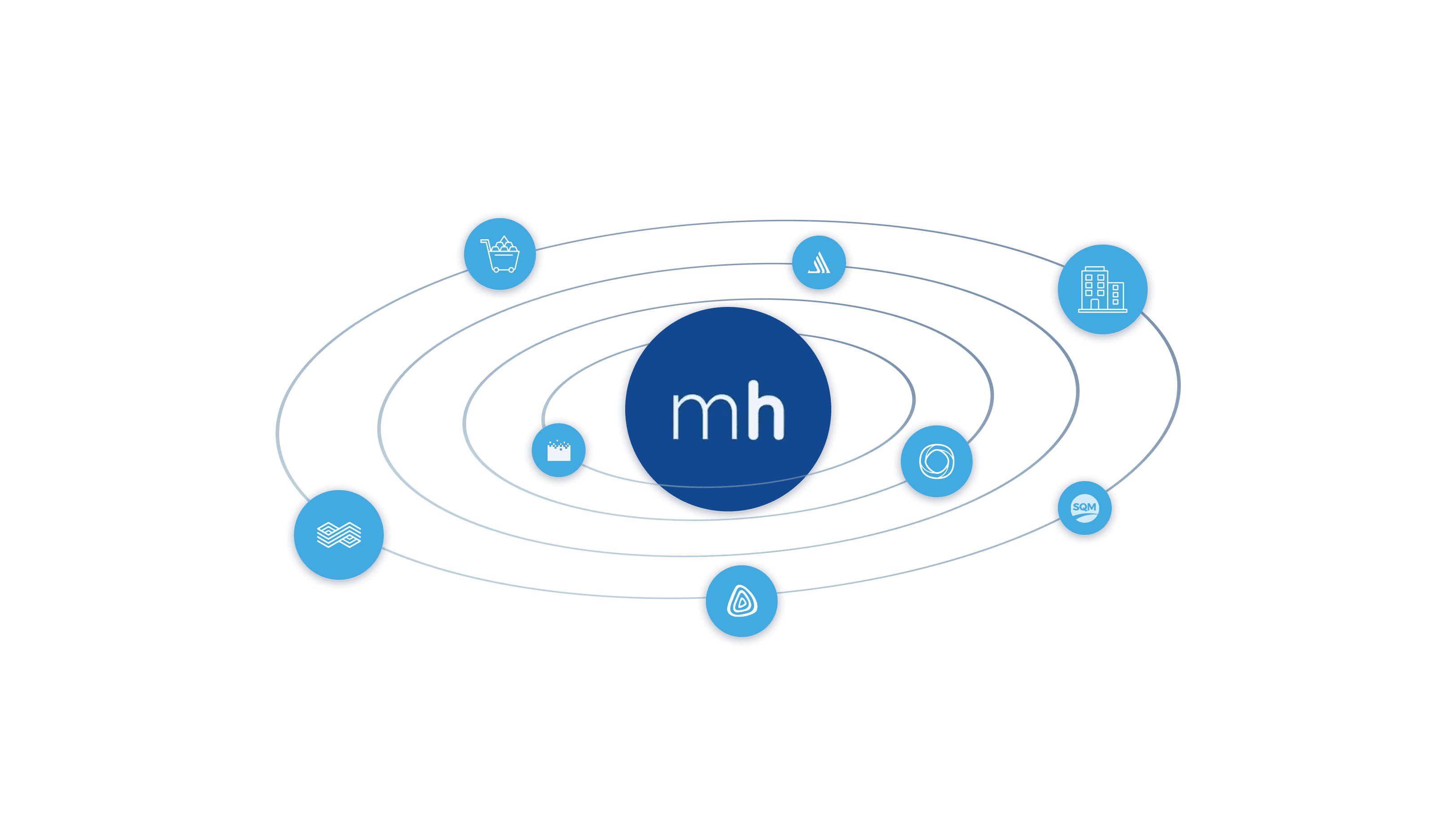
Metalshub provides specific solutions across the supply chain:
By combining internal sales workflow tools with an active B2B market network, Metalshub enables commercial teams to move from speculative spreadsheet trading to structured, data-driven sales execution.
Metalshub use cases include marketplace, price discovery, tender and auction management, contract management, inventory management, risk and compliance, data and analytics, and embedded trade finance (forfaiting, via a partnership with Walbing).
“Accessing the platform opened up new markets to us. It opened up new customers. Before Metalshub, we ran parts of our business almost entirely on gut feel. Now, we’re making choices based on facts.”
A fundamental distinction between a horizontal CRM and an industry-specific sales platform lies in how they handle market expansion. Salesforce operates as a closed system. It stores the contacts, accounts, and leads that your commercial team has already identified and input into the system. It helps salespeople remember when to follow up with an existing account, but it cannot introduce your sales team to new buyers or signal unfulfilled market demand.
Metalshub combines sales management tools with an active market network of over 3,000 pre-vetted, KYC-checked, active companies. Commercial teams can use Metalshub to:
For raw material sellers, this shifts the platform from being a simple record-keeping database into an active revenue-generating channel.
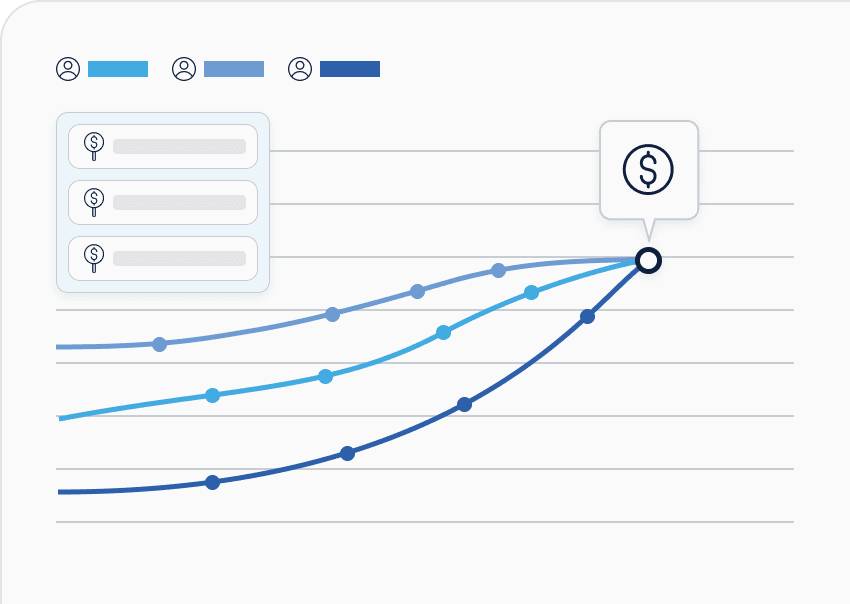
Pricing physical commodities is fundamentally different from pricing standard software, machinery, or industrial goods.
Salesforce has no commodity price data. Its CPQ is built for standard B2B sales logic. It excels at configuring static product options, applying pre-approved percentage discounts, and outputting clean quote documents. However, configuring Salesforce CPQ to dynamically calculate commodity pricing, where offers fluctuate based on real-time market indices, impurity penalties, moisture adjustments, and multi-leg freight calculations, requires extensive, expensive custom coding.
Metalshub natively supports commodity pricing structures out of the box. Sales teams can set up index-linked pricing formulas (tied to reporting agencies or exchanges like the LME or Fastmarkets), incorporate chemical specifications, and calculate netback prices across multiple delivery locations.
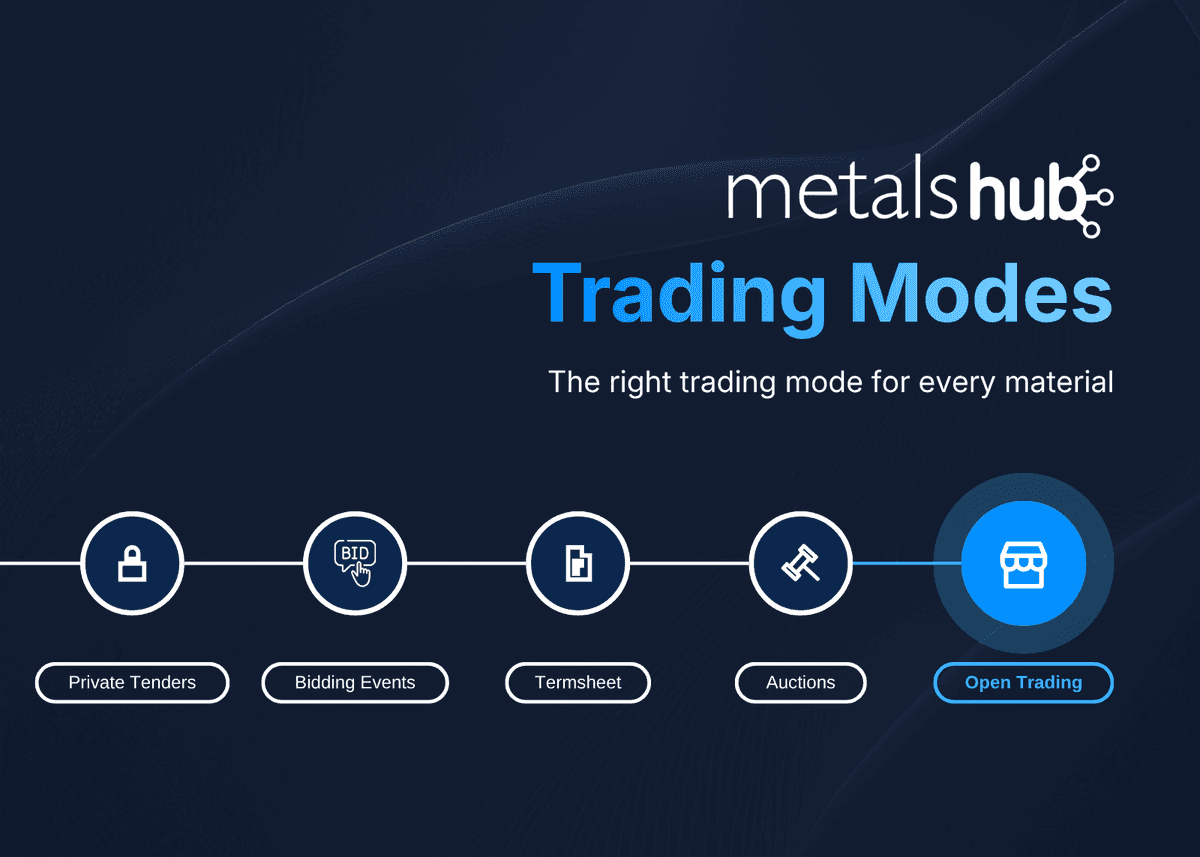
Furthermore, Metalshub allows sales teams to launch sell-side bidding events and digital auctions. Rather than sending static email quotes, sellers can invite multiple qualified buyers to bid dynamically on available material, creating transparent price discovery and capturing true market value for premium grades.
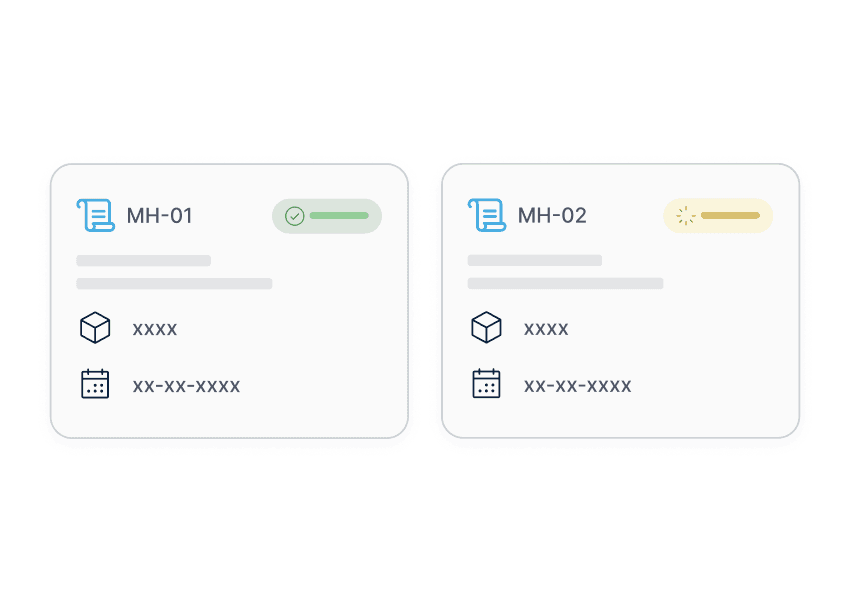
In raw material sales, managing incoming commercial requests is more detailed than managing a standard sales pipeline.
Salesforce treats incoming requests as “Leads” or “Opportunities.” While custom fields can be added to capture details, the core interface is designed around standard deal stages (e.g., Qualification, Proposal, Closed Won). Crucial commercial details, such as element composition, lot sizes, and payment terms, are frequently buried in attached PDF quotes or unstructured email threads.
Metalshub structures raw material enquiry management into a standardised digital workflow. Commercial teams can capture incoming buyer requests, whether received via the platform, email, or phone, and evaluate them against specific parameters:
By centralising these structured variables, sales directors gain instant visibility into live market demand across product lines, preventing miscommunication between commercial sales desks and plant operations.
“The transparency and structure gained through Metalshub helped us make more data-driven sales decisions. In the first three months after joining, we were able to win ~30% of all offers made and even discovered and conducted business with one new customer. It’s a technically advanced and easy-to-use software.”
Signing a contract in commodity trading is rarely the end of the commercial workflow; it is the start of execution.
Salesforce added a native CLM app, Salesforce Contracts, within its Revenue Lifecycle Management suite in 2026, bringing templates, approvals and version tracking. It handles the basics of sales contracting, but multiple contract-management specialists note it is not a full CLM on its own.
Deeper contract lifecycle management on Salesforce is typically added through third-party CLM platforms such as Juro, Ironclad, Conga or Sirion.
Metalshub, instead, provides metals-specific contract management (long-term contracts, call-off scheduling, multi-element pricing conventions) designed for raw material execution:
Modern raw material buyers increasingly demand verified compliance and environmental data before finalising orders.
Salesforce’s Net Zero Cloud provides organisation-level carbon accounting and ESG reporting. It is designed to calculate an enterprise’s overall carbon footprint for corporate ESG reporting, but it does not natively calculate product-level emissions during the quoting stage.
Metalshub embeds compliance and sustainability directly into the trading process:
The difference is granularity and placement. Net Zero Cloud reports a company’s footprint. Metalshub attaches emissions and compliance data to the specific deals in the procurement workflow.

Choosing between Salesforce and Metalshub is rarely an “either/or” decision. It depends on the company’s commercial infrastructure and primary operational goals.
For large mining companies and global trading houses, Salesforce and Metalshub can work well together.
In a combined architecture:
Using API integration, finalised transaction data and contract terms from Metalshub automatically sync back into Salesforce and your ERP, giving leadership enterprise-wide visibility without forcing sales teams to trade using a generic spreadsheet or standard CRM.
Ready for More Information?
Discover how Metalshub can streamline your procurement, sales, or tolling processes. Contact us and book your demo now for a firsthand look.
Salesforce can be configured for raw material sales, but it requires extensive customisation. Out of the box, Sales Cloud and Salesforce CPQ are designed for generic B2B sales. To handle raw material specifications, assays, index-linked pricing, and delivery laycans, companies must build custom objects or purchase third-party enterprise tools.
Salesforce CPQ is optimised for static product catalogues, fixed price lists, and standard discount rules. Commodity sales tools like Metalshub are designed for dynamic pricing formulas that change based on live market indices (e.g., LME, Fastmarkets), chemical composition variations, freight netbacks, and competitive bidding structures.
A CRM (like Salesforce) records and tracks commercial relationships, contacts, and deal stages. A raw material sales platform (like Metalshub) structures and executes the physical trade itself, providing market access to new buyers, structuring offer specifications, executing contracts, and capturing real-time market price discovery.
Newsletter