Battery Raw Materials
The Shift to Digital Price Discovery in the Lithium Industry | MetalshubTalks 006 Recap
 Written bySamir Jaber
Published on
Share Post
Battery Raw Materials
Written bySamir Jaber
Published on
Share Post
The global lithium market is undergoing a profound structural evolution. Driven by unprecedented growth in electric mobility and critical infrastructure like stationary energy storage for AI data centres, lithium has transitioned from a niche specialty chemical into a highly scrutinised global bulk commodity. However, traditional opaque, behind-closed-doors sales mechanisms are beginning to show cracks.
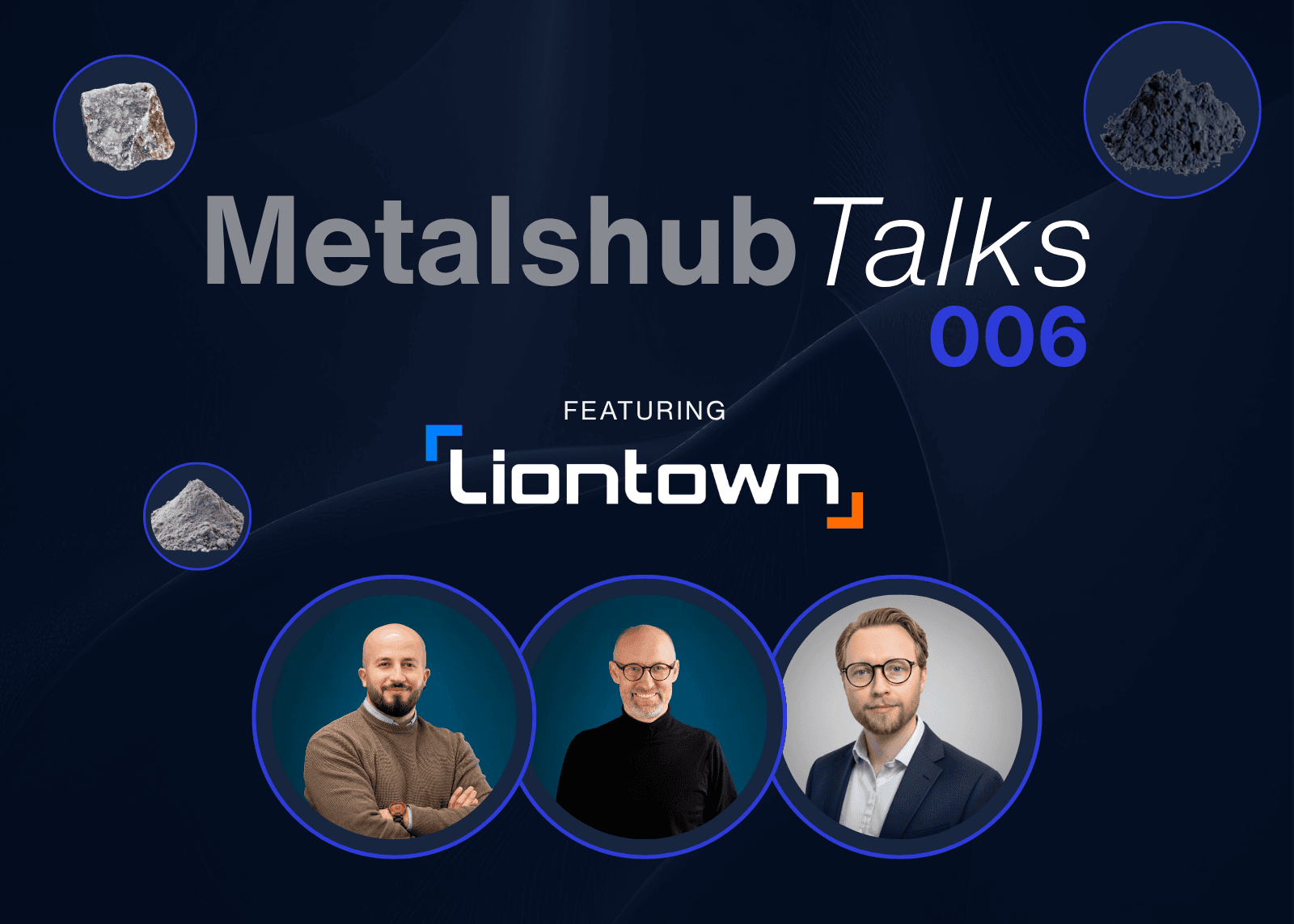
In a recent episode of MetalshubTalks, I hosted industry experts Grant Donald, Chief Commercial Officer at Liontown, and Dr. Frank Jackel, Co-Founder and Managing Director of Metalshub, to discuss how technology is paving the way for transparent and reliable market signals. Below are the highlights of the conversation.
Q: Liontown recently transitioned into commercial production at Kathleen Valley, which is now the largest underground lithium mine in the world. As a major new producer entering the market, why did Liontown choose to embrace digital auctions on Metalshub so early in its lifecycle?
Grant Donald: It has been a very deliberate strategy for us. From the inception of the company’s off-take planning, we consciously decided to retain a 10% portion of our volume specifically for spot market activity. The main driver was to ensure physical liquidity. When we signed our initial off-take agreements back in mid-2022, the Spodumene index had fairly thin liquidity, making it difficult for customers to feel comfortable contracting based on that index alone. At the time, the industry used more liquid lithium salt indices (carbonate and hydroxide) as a proxy. Today, we have a tried-and-tested Spodumene index, but for any index to be fully trusted by both buyers and sellers, it requires physical transactions to consistently inform it.
Read more: Liontown Joins Metalshub to Enhance Spodumene Concentrate Sales
Q: Historically, lithium was treated as a specialty chemical traded via private, multi-year contracts, but today it behaves much more like a bulk commodity. Frank, why is the industry reaching this tipping point where bilateral negotiations are no longer sufficient on their own?
Dr. Frank Jackel: We have to look at the different types of materials. Spodumene—the hard rock, lithium-bearing mineral—is clearly becoming a bulk commodity. It is shipped in massive volumes across the ocean in large vessels. The primary driver for this transition from a specialty chemical to a commodity is the explosive rise in demand from electric vehicles and battery storage systems. In the past, lithium was fragmented across pharmaceuticals, rubbers, and fire retardants. Now there is one dominant use case. This dominant demand creates the need for a highly liquid, transparent market price index. Bilateral negotiations will still exist, but you need a robust, reliable spot market mechanism to act as an efficient anchor for those long-term contracts.
Q: For those unfamiliar with the digital route, Frank, could you provide an overview of what a digital bidding event actually looks like on the Metalshub platform, and how it differs from a traditional email or spreadsheet-based tender?
Dr. Frank Jackel: On Metalshub, a producer like Liontown hosts a bidding event by uploading highly specific material specifications and terms of contract. They invite counterparties who are given a set time window to submit their bids for that specific parcel. It gives everyone an entirely fair, transparent, and equal opportunity to bid. For buyers, it opens the door to secure premium material directly from a tier-one producer. For the seller, it provides a comprehensive, structured overview of market depth and participant activity, allowing them to choose the optimal counterparty effortlessly.
Q: Grant, your first digital auction on Metalshub attracted buyers from nine different countries. How did this digital format alter your ability to discover pockets of demand compared to traditional sales routes?
Grant Donald: Having everything central on one platform makes the data instantly comparable and far easier to evaluate than running endless spreadsheets or email bids. While a number of the bidders were already known to Liontown, Metalshub introduced new customers that weren’t originally on our radar—ultimately increasing our potential buyer pool by about 40%. Furthermore, because the terms and conditions are uniform and completely transparent to everyone upfront, it creates an even playing field that simplifies the interaction for everyone involved.
Read more: Inaugural spodumene concentrate auction outcome – Liontown Ltd
Q: The lithium market has experienced severe volatility over the last two years. Frank, how do digital bidding events help clarify price signals during periods of extreme market uncertainty?
Dr. Frank Jackel: It is a basic rule across all asset classes that illiquid markets are inherently more volatile. Because lithium historically operated on a minor, illiquid spot market, any minor fluctuation in demand caused massive, violent price swings. Digital bidding events inherently improve market liquidity. Higher liquidity naturally compresses spreads and lowers artificial volatility. Right now, too much material still disappears exclusively into long-term contracts without interacting with the spot market, which prolongs volatility. The industry’s collective goal should be to move more volume digitally so that genuine industrial demand—rather than speculative demand—sets the true price signal.
Q: Grant, how does the data generated from these digital auctions feed back into your broader long-term commercial strategy with battery makers and automotive OEMs?
Grant Donald: Every single spot transaction we execute on the platform is reported to Price Reporting Agencies (PRAs). This injects real, physical data points into their daily price assessments. A more accurate reflection of physical reality gives both buyers and sellers the confidence to peg their massive, long-term contracts to that very index. It is very similar to the iron ore market dynamic, where roughly 10% of seaborne cargoes are traded on the spot market, and that 10% effectively establishes the pricing data points that dictate how the remaining 90% of contracted product flows. For us, managing extreme volatility isn’t about making knee-of-the-curve commercial adjustments based on a single day’s auction results. It’s about being consistently in the spot market to drive reliable index transformation.
Q: Sustainability and supply chain provenance requirements—like the EU Battery Passport—are rapidly becoming mandatory. Frank, how does a digital trading trail support these growing ESG demands?
Dr. Frank Jackel: When dealing with critical minerals like lithium, knowing precisely who produced the material and under what environmental conditions is paramount. Digital platforms are uniquely positioned to solve this logistical hurdle because compliance and ESG certificates can be immutably attached directly to the transaction profile. Buyers instantly see the producer and the digital trail of custody. Moving away from fragmented communication tools like emails or WhatsApp ensures that high ESG-standard producers can actually prove their compliance and be rewarded for their efforts to protect the environment.
Q: From a producer’s perspective, Grant, how does an auditable digital platform help build trust? Can it help you leverage the significant ESG investments Liontown has made?
Grant Donald: We made a massive upfront investment to build what was Australia’s largest off-grid renewable hybrid power station—utilising wind turbines, a solar farm, and battery storage to power our operations with over 80% renewable energy. While that level of sustainability doesn’t automatically translate into a financial premium, it heavily influences a buyer’s preference for our material. Having an auditable digital platform that effortlessly tracks, facilitates, and proves exactly where a sustainable product was sourced and consumed is an invaluable component of our value proposition to tier-one partners.
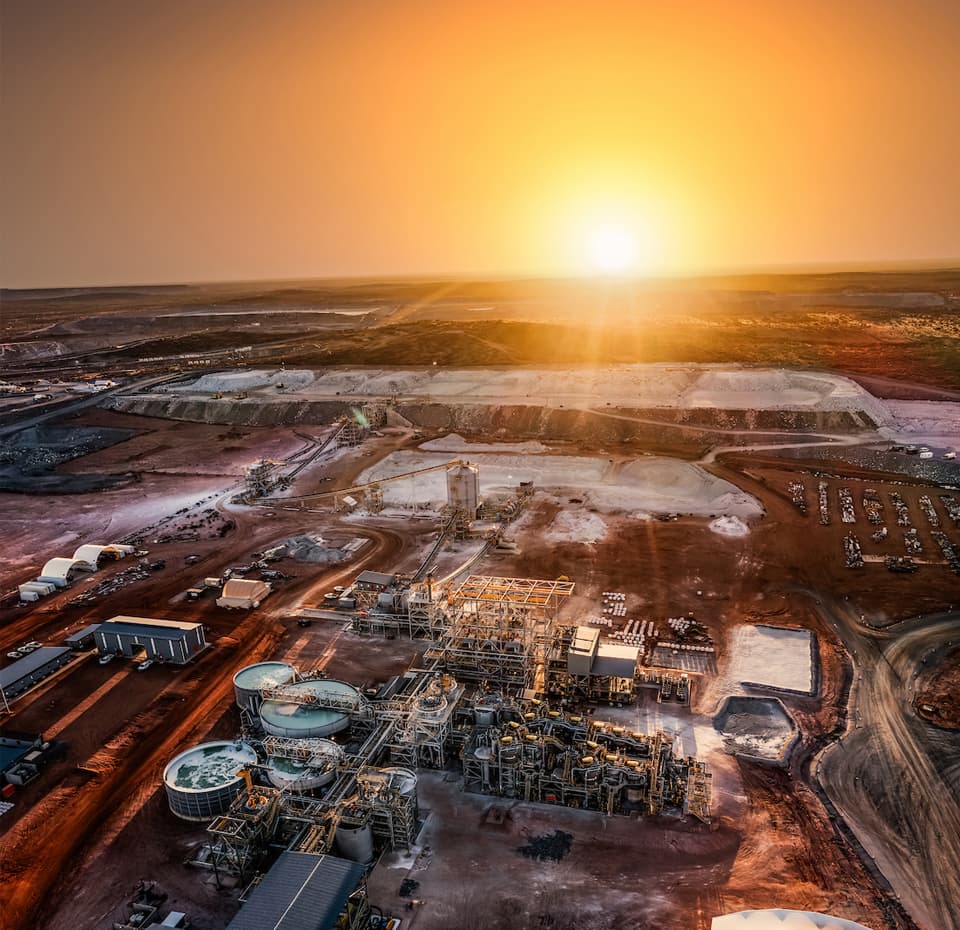
Liontown’s Kathleen Valley Lithium Project (Credit: Liontown)
Q: Looking ahead three years, do you foresee a future where the majority of spot lithium is traded digitally? What would the “new normal” look like?
Grant Donald: I absolutely believe digital platforms will become the dominant force in lithium spot sales. It simplifies the transaction lifecycle immensely. Once a bid is accepted, the contract terms are securely locked in, removing the administrative burden of chasing signatures. Liontown remains fully committed to pushing more physical tons through digital spot markets because technology and transparency ultimately yield a healthier, more streamlined industry.
Dr. Frank Jackel: I am highly optimistic. Beyond efficiency, there is strong momentum from G7 nations and raw material-producing countries like Australia to retain fair, liquid, and open price discovery mechanisms outside of dominant regional monopolies. Embracing digital marketplaces is in the vested interest of companies and governments alike to preserve global market stability.
The consensus from producers and marketplace innovators is clear: the maturation of the lithium industry goes hand-in-hand with its digitalisation. By shifting away from opaque bilateral traditions and introducing digital bidding platforms, the industry can inject critical physical data points into global indices, mitigate artificial market volatility, and seamlessly verify stringent ESG compliance. For progressive market leaders, utilising technology to foster transparent price discovery is no longer just an optional innovation but the foundation of future global trade.
MetalshubTalks 006
Interested in watching the full episode?
Click below and watch it for free.
Newsletter