Iron & Steel
Aluminium
Copper
Industrial Minerals
Battery Raw Materials
Platform Comparison
Coupa vs Metalshub: Which Platform Is Better for Raw Material Procurement?
 Written bySamir Jaber
Published on
Share Post

Iron & Steel
Aluminium
Copper
Industrial Minerals
Battery Raw Materials
Platform Comparison
Written bySamir Jaber
Published on
Share Post
This article compares Coupa and Metalshub from the perspective of raw material procurement, sourcing, and commercial teams. It examines where Coupa performs well as a general business spend management platform, where it falls short for physical commodity sourcing, and how specialised raw material procurement platforms like Metalshub close the gap.
Coupa and Metalshub start from opposite points. Coupa is a business spend management platform that helps large companies control and automate purchasing across every category they buy. Metalshub starts from the raw material itself, built only for sourcing physical commodities in the metals, mining, and recycling industry.
The gap shows most when the purchase is a direct raw material. Buying metals, alloys, industrial minerals, scrap, or battery materials takes more than routing requisitions and managing catalogues. It runs on index-linked prices that move with the market, adjustments for chemistry and quality, tenders for specific grades and volumes, and a vetted base of suppliers.
These are the everyday conventions of commodity buying, and they sit outside what a general spend management suite is built to do. The table below sets out how the two platforms differ for raw material procurement.
| Coupa | Metalshub | |
| Core purpose | Horizontal business spend management across all categories of corporate spend | Purpose-built platform for sourcing direct raw materials in metals, mining, and recycling |
| Supplier discovery | Large general network of 10M+ buyers and suppliers across all categories | Network of pre-vetted, KYC-checked metals, mining, and recycling counterparties |
| Pricing logic | Catalogues, negotiated prices, tiered discounts, and bid evaluation | Index-linked formulas, chemistry-based and multi-element pricing, offer normalisation |
| Price discovery | Benchmarking from community transaction data | Active supplier network enables competitive price discovery events |
| Tenders and auctions | Mature RFx events, reverse auctions, and scenario optimisation across categories | Public and private tenders, reverse auctions and digital negotiations built around raw material specs |
| Contract management | Enterprise-grade CLM across all spend, with clause libraries and approvals | Commodity-aware contracts, call-offs against frameworks, and linked certificates of analysis |
| Compliance and carbon | Corporate and category-level ESG reporting for frameworks such as CSRD and CSDDD | Transaction-level CO2 and CBAM-ready origin and Scope 3 data in the offer workflow |
| Industry fit | Industry-agnostic, configured to each organisation | Built for the metals, mining, and recycling sectors |
| ERP integration | Deep integration hub across procurement, invoicing, and payments | Connects to ERP and indirect procurement software via API |
| Onboarding | Substantial deployments, commonly several months with implementation partners | Typically weeks, without third-party consultants |
Coupa Software is a US-based provider of business spend management technology, headquartered in San Mateo, California. The company grew from an e-procurement tool into a broad spend management suite used by large global enterprises, and it was taken private by Thoma Bravo in 2023.
Gartner named Coupa a Leader in its 2026 Magic Quadrant for Source-to-Pay Suites, positioned highest for Ability to Execute, its third consecutive year in the Leaders quadrant, in an evaluation of 13 providers.
Coupa positions itself around total spend visibility, helping organisations manage what they buy across procurement, invoicing, and payments in one system.
The platform is organised into modules that cover the source-to-pay cycle:
A defining feature of Coupa is its Community Intelligence. It analyses anonymised transaction data across a network of more than 10 million buyers and suppliers. From that data, Coupa benchmarks performance and surfaces prescriptive recommendations on spend. This scale supports indirect spend, tail spend, and the wide base of goods and services a company buys to run its operations.
Coupa is built to manage all of that spend in one place. Its network and data models cover the full range of what a company buys, from IT services to professional fees to physical goods. The platform is designed for breadth across categories rather than depth in any single one.
Independent user reviews aggregated on G2 credit Coupa’s breadth and spend visibility. The same reviews frequently flag cost, implementation complexity, and slow time-to-value.
Metalshub is a B2B software platform built specifically for the metals, mining, and recycling industry. It digitalises the commercial workflows involved in buying, selling, and trading physical raw materials. More than 3,000 companies use the platform, including Outokumpu, RHI Magnesita, Saarstahl, and Ovako.
Metalshub offers three solutions across the supply chain:
For raw material buyers, the Procurement Solution digitalises the full sourcing process, from demand management through pre-trade, trade, and post-trade activities. Buyers can discover new suppliers, run competitive enquiries and tenders, normalise offers across Incoterms and currencies, and manage long-term contracts and call-offs in one place.
The platform also connects buyers to the industry’s supplier network, with pre-vetted, KYC-checked counterparties and a platform-wide supplier rating system. Buyers using the Procurement Solution have added an average of nine new suppliers and reduced direct raw material costs by 2.3% per year.
Metalshub use cases for procurement teams include supplier discovery, price discovery, tender and auction management, contract management, inventory management, risk and compliance, and data and analytics. The platform integrates with ERP systems, and Outokumpu, for example, has connected it to SAP so contracts transfer automatically between the two.
“Bringing in Metalshub gave us the visibility we needed and helped us to make more strategic purchases. On a group level, it also enabled us to create a central purchasing unit.”
A horizontal spend management platform and a metals-specific sourcing platform are built to solve different problems. The comparison below looks at different areas that matter most to buyers of direct raw materials, where each platform is strong, and where the fit depends on what a procurement team is actually buying.
Coupa was architected for indirect and total spend, and its direct materials tooling was added onto that foundation rather than designed in from the start. The data model centres on requisitions, catalogues, purchase orders, and invoices. It was not built around bills of materials, engineering drawings, revision management, or the technical RFQs that manufacturing-first sourcing runs on.
Coupa can hold a raw material as a line item and route it for approval. It does not natively model a grade specification, a chemistry range, or a price that recalculates against a published index. Those sit as attributes bolted onto a general spend record. A steel mill or refractory producer reaches the edge of what a horizontal suite covers. It manages the paperwork around a purchase well. The commercial substance of the deal, its specification, pricing formula, and quality tolerances, sits outside what the model was built to carry.
Finding and qualifying new suppliers is where the two platforms differ most in design. The distinction is scope, not size. Coupa operates one of the largest business networks in procurement, far larger in absolute terms, but general. Metalshub’s network is smaller and curated, built to discover and qualify new metals counterparties rather than only transact with existing ones.
Coupa connects more than 10 million buyers and suppliers across over 200 countries. The network serves every category of corporate spend, so it is organised around suppliers in general rather than around commodity grades, specifications, or origins.
Coupa connects buyers to those suppliers through the Coupa Supplier Portal, where suppliers register to receive orders and submit invoices. Reviewers on G2 describe the portal as an extra step for suppliers, noting that logging in to submit an invoice and navigating account and connection flows can slow transactions. It is built to manage relationships a buyer already has, not to introduce new counterparties.
Metalshub’s network is composed entirely of metals, mining, and recycling counterparties. Using the Procurement Solution, buyers can:
For sourcing a new ferrochrome, copper, or nickel supplier, a curated network of vetted metals counterparties is directly relevant to the task, and buyers can qualify new counterparties rather than work only from an existing list.

Pricing direct raw materials works differently from pricing standard goods and services. Coupa’s sourcing tools handle RFx events, tiered and expressive bidding, and spot buys. Coupa Sourcing Optimisation (its advanced bid-analysis module) can evaluate complex award scenarios against cost, capacity, and logistics constraints. Its pricing logic is built around negotiated prices, catalogues, and bid evaluation.
Public documentation does not show native support for prices linked to commodity indices such as the LME or Fastmarkets, or for adjustments based on chemistry, moisture, or impurities.
Metalshub supports commodity pricing structures out of the box:
For teams buying against volatile, index-linked prices with quality adjustments, this is the sharpest functional gap between a generalist suite and a purpose-built tool.
Coupa’s spend analytics are broad and powerful across categories. Reaching commodity-specific insight generally means configuring the platform to the buyer’s own data.
Metalshub reports on the metrics raw material buyers manage against directly. Purchase price variance tracks the price paid against the relevant index or benchmark, so a team can see how much of a movement came from the market and how much from negotiation. Benchmarking compares awarded prices across enquiries and over time, showing where a given deal sits against the platform’s transaction data, published as the Metalshub Price Index. Supplier win-ratio analytics show how often each supplier is invited, quotes, and wins, which helps a buyer keep a competitive field and see which suppliers have gone quiet.
“We have been looking for the best partner to digitise our sourcing process and have decided that the Metalshub supply chain solution is the best option for us, when considering raw material sourcing.”
Managing incoming offers in raw material buying involves more variables than a standard sourcing event.
Coupa provides mature tender tooling, RFI, RFQ, and RFP events, reverse auctions in several formats, and scenario optimisation for large, multi-line awards. This is a capable, general-purpose strategic sourcing approach, suited to complex cross-category events.
Metalshub structures the enquiry-to-contract process around raw materials, letting buyers:
GMH Group, which had run e-auctions for years, moved its spend onto the Metalshub platform and integrated it with its ERP. Product group manager Manuel Freier-Nostheide noted that the change removed dead ends and irrelevant invitations from its auction process.
Coupa’s optimisation engine can be more sophisticated for large multi-line awards. Metalshub is faster to run for the recurring rhythm of raw material enquiries, because normalisation and commodity specifications are already built in.
Coupa’s contract lifecycle management offers authoring, clause libraries, approval workflows, a central repository, renewal alerts, and links to purchase orders. It is broad, enterprise-grade contract management. What the documentation does not show is an engine that recalculates a contract price when a commodity index moves; escalation terms can be stored as clause text but not computed.
Metalshub treats the contract as the start of execution rather than the end of the deal, building the workflow around how commodity contracts are actually run and documented. The platform’s contract management is commodity-aware:
For example, at Outokumpu, one of the world’s largest stainless steel producers, buyers use Metalshub to execute digital call-offs against long-term contracts. The platform checks the remaining volumes against the contract balance and, upon confirmation, data flows into SAP to automatically generate the purchase order.
Both platforms offer credible contract management. The difference is that one is built for corporate contracting across all spend, and the other for the mechanics of metals contracts and the documentation that travels with them.
Carbon and compliance data increasingly shape raw material buying decisions.
Coupa provides third-party and supplier risk management, supplier onboarding, and ESG tooling that brings sustainability data into spend decisions, with support for reporting frameworks such as CSRD and CSDDD. Its carbon capabilities are oriented to corporate and category-level, spend-based emissions rather than the CO2 of an individual raw material lot.
Metalshub puts compliance and carbon data inside the deal rather than in a separate reporting layer, capturing it at the point of purchase. Here’s what the Procurement Solution does:
This matters now that the EU Carbon Border Adjustment Mechanism entered its definitive period on 1 January 2026, requiring importers of goods such as iron, steel, and aluminium to account for embedded emissions, with the first annual CBAM declaration covering 2026 imports due by 30 September 2027.
Coupa is built as an enterprise integration hub. It offers documented integration playbooks for SAP (ECC and S/4HANA), Oracle E-Business Suite, and NetSuite, an open API, flat-file and web-service options, and a certified partner programme for building ERP connectors.
In a typical setup, master data flows from the ERP into Coupa at the start of the process and approved transactions flow back at the end, with Coupa managing the procure-to-pay steps in between.
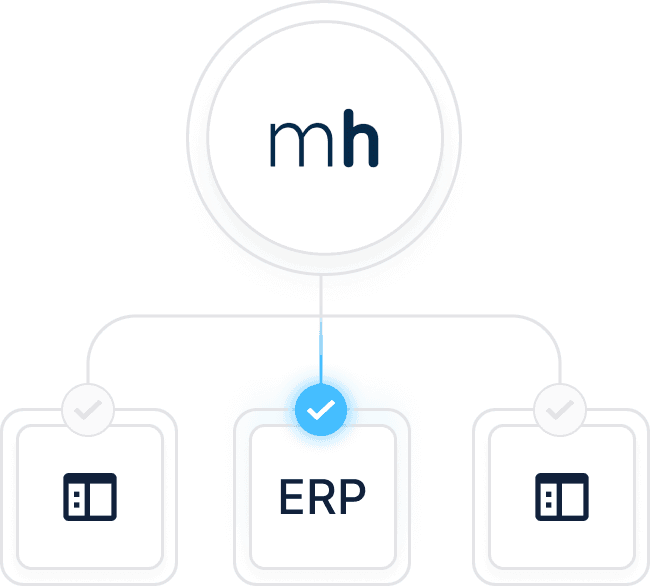
Metalshub is designed to connect into an existing system landscape without becoming a second ERP. Because its scope is focused on raw material sourcing, it is delivered as a ready-to-use platform rather than a large configuration project.
It connects to ERP systems, indirect procurement software, and other tools via API, transferring finalised contracts into the ERP and pulling purchase order numbers and notifications back the other way.
The right platform depends on what a procurement team spends most of its time and money buying. For most organisations, the two are not direct substitutes, because they are built around different kinds of spend.
In a combined setup, the horizontal platform (Coupa) and the specialist platform (Metalshub) each do the work they are built for:
The two connect through the ERP. Finalised contracts and transaction data from raw material sourcing flow into the ERP and, where relevant, the spend management suite, giving finance and leadership one view of total spend without forcing raw material buyers to work in a tool that was not built for commodities.
For procurement teams whose strategic cost sits in metals, alloys, scrap, industrial minerals, and battery materials, the Metalshub Procurement Solution digitalises source-to-contract for raw materials and connects to the ERP alongside an existing spend management suite. To see how it fits a specific sourcing process, book a demo with the Metalshub team.
Ready for More Information?
Discover how Metalshub can streamline your procurement, sales, or tolling processes. Contact us and book your demo now for a firsthand look.
Coupa can be used for direct materials and has invested in direct-spend capabilities, but its core strength is indirect spend, tail spend, and procure-to-pay across all categories. Direct raw material sourcing depends on index-linked pricing, chemistry adjustments, and offer normalisation, which are not native to a horizontal spend management suite and typically require custom configuration.
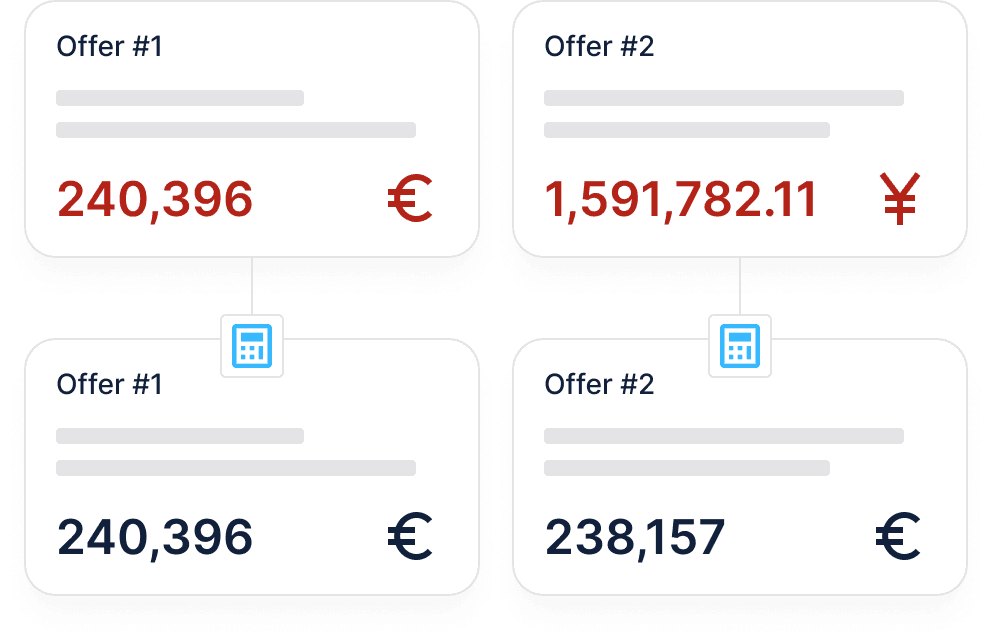
Offer normalisation adjusts every quote to a single comparable landed price, accounting for Incoterms, currencies, payment terms, freight, and chemical deviations. It matters because raw material offers are rarely like-for-like, and comparing them without normalisation can lead a buyer to award on a headline price that is not actually the lowest total cost.
Not exactly. For indirect spend and enterprise procure-to-pay, Coupa and its peers are the relevant tools. For direct raw material sourcing, Metalshub is the specialist alternative. Many companies use Metalshub alongside a horizontal suite rather than instead of one.
Metalshub is not designed to replace a horizontal spend management suite. It focuses on direct raw material sourcing and integrates with ERP and indirect procurement software, so it complements rather than replaces a platform like Coupa.
Newsletter