Battery Raw Materials
Iron & Steel
Aluminium
Copper
Industrial Minerals
Introducing Relationships: One Workspace for Managing Counterparties

Published on
Share Post
Battery Raw Materials
Iron & Steel
Aluminium
Copper
Industrial Minerals
Published on
Share Post
In metals, mining, and recycling, relationships determine who gets invited, who gets onboarded, who is trusted, and who ultimately trades. Every sourcing decision, negotiation, and contract award depends on how well counterparties are identified, structured, and understood.
Yet in many organisations, counterparty management remains fragmented. Supplier lists sit in spreadsheets. Customer Relationship Management (CRM) tools track contacts but not product relevance. Supplier Relationship Management (SRM) systems capture high-level classifications without reflecting how relationships actually work on the ground. Risk and compliance data live elsewhere. And context gets lost as teams change and markets shift. The result is friction in places where clarity matters most:
This is the gap Metalshub set out to address with the all-new Relationships feature.
Relationships is a dedicated workspace for managing counterparties across their whole lifecycle. It is designed to support how procurement and sales actually operate in raw materials markets.
At its core, Relationships provides a single, structured interface where companies manage buyers, sellers, or both. Each relationship is owned by the company that creates it. There are no mirrored links, no shared ownership, and no ambiguity over who controls the data.
This ownership model matters. It ensures that relationship data reflects how your organisation works with a counterparty, not how the counterparty chooses to describe the relationship.
For companies that both buy and sell, Relationships serves as an SRM for procurement and a CRM for sales in a single unified workspace. Buyers and sellers are managed together, with a clear purpose and product-level relevance.
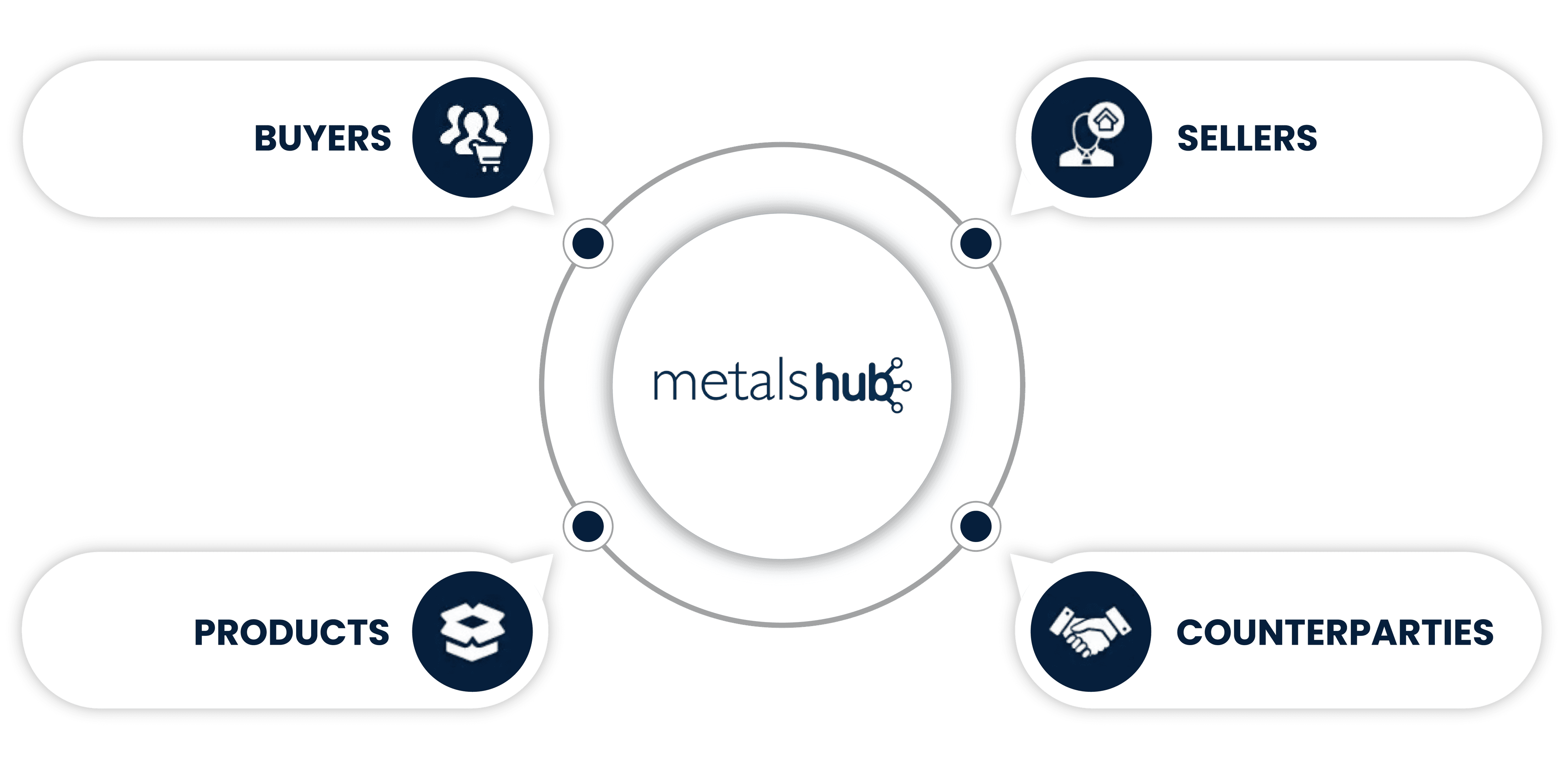
In raw materials markets, relationships are rarely generic. A supplier may be relevant for one alloy and unsuitable for another. A customer may be onboarded for spot sales but not for long-term contracts. Relationships captures this reality by shifting the focus from companies to products.
Each counterparty relationship can be linked to specific products and assigned a clear purpose. Buy and sell relevance is defined by the list owner and applied at the product level. This structure supports more precise sourcing, cleaner invite lists, and better decision-making when evaluating offers.
Instead of relying on static company categories, teams work with relationship data that reflects how trade actually happens.
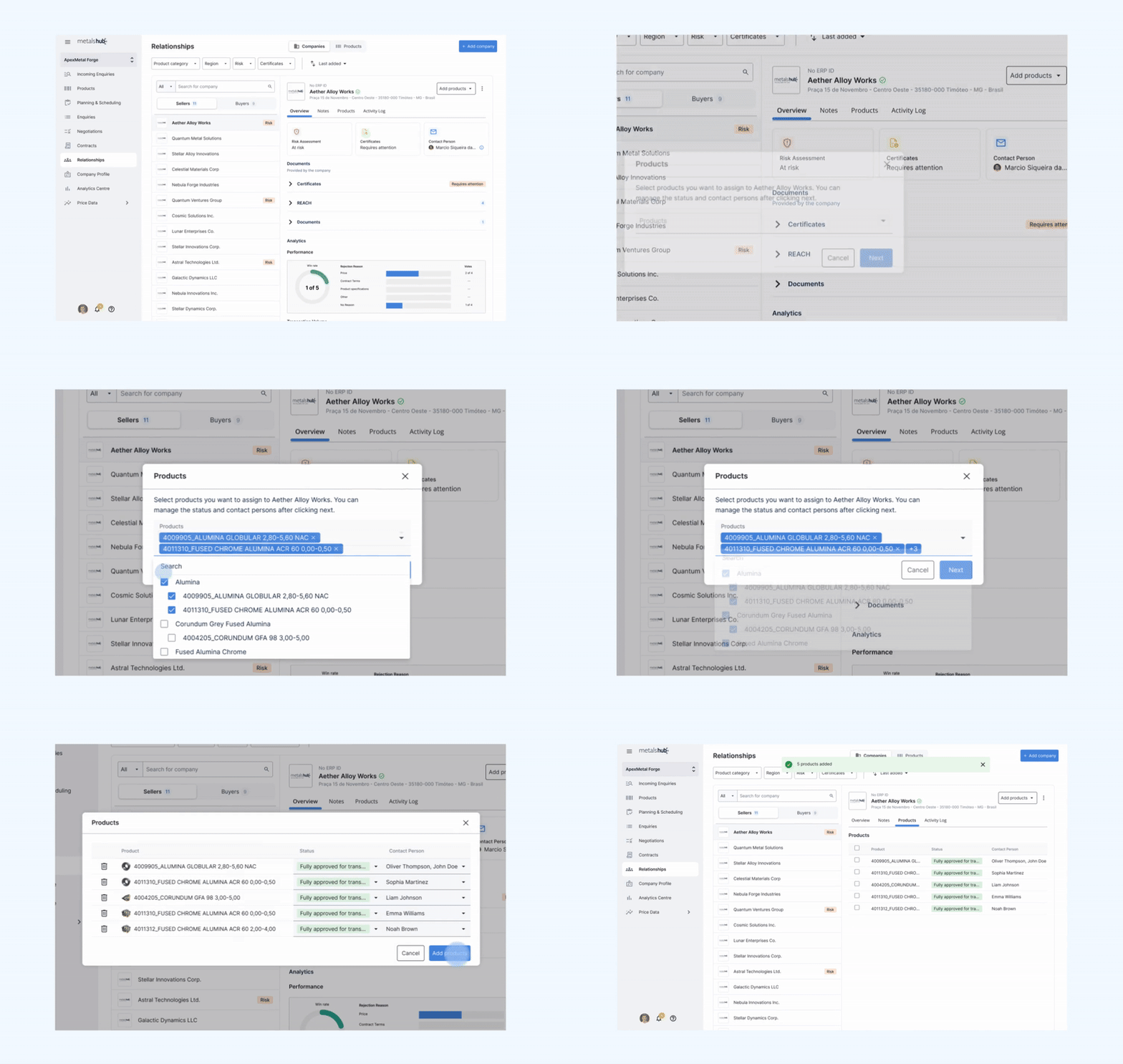
Onboarding is not a one-time event but a state that affects daily decisions.
Relationships introduces configurable states of relationships and onboarding that align with your internal processes. Each company defines its own workflows, including initial onboarding states, allowed transitions, and rules that determine when a counterparty is considered onboarded.
This status is visible where it matters. When reviewing offers, teams can immediately see whether a counterparty is onboarded. When building invite lists, only approved counterparties are included by default. When compliance reviews take place, onboarding progress is clear and auditable.
Risk data only adds value when it is visible in the right place. Relationships allows teams to assign risk states to counterparties and control how that information is surfaced. Risk states can be displayed as chips on dashboards and company cards, making risk context immediately accessible without overwhelming users.
Certificates are tracked alongside relationships rather than stored in isolation. Procurement and sales teams see certificate status in context, linked directly to counterparties and products. This supports compliance readiness and reduces friction during audits.
Transactions alone do not tell the whole story of a relationship. Context matters.
The Relationships feature includes counterparty history and internal notes at both the relationship and product levels. Teams can capture key interactions, onboarding context, and relevant background information so that knowledge stays with the company rather than with individuals.
This shared context supports better alignment across teams. When evaluating an offer, users see not only the price but also the relationship history behind it. When managing long-term partnerships, teams understand what has already happened and why certain decisions were made.
All relationship data is consolidated into a single company dashboard.
Users see their entire counterparty landscape at a glance, including companies, relationship products, onboarding status, risk states, and certificates. For companies that buy and sell, the dashboard groups counterparties by purpose while maintaining a unified view.
This consolidation reduces duplication, eliminates confusion, and prepares relationship data for downstream workflows such as enquiries, negotiations, analytics, and compliance reporting.
Relationships supports efficient discovery and onboarding of new counterparties.
Users can search existing companies, invite new ones, and manage role assignment consistently throughout the onboarding process. Invited companies are handled transparently, with temporary roles inferred where needed and reused across subsequent invites.
Discovery and onboarding become part of the same structured process rather than separate manual steps.
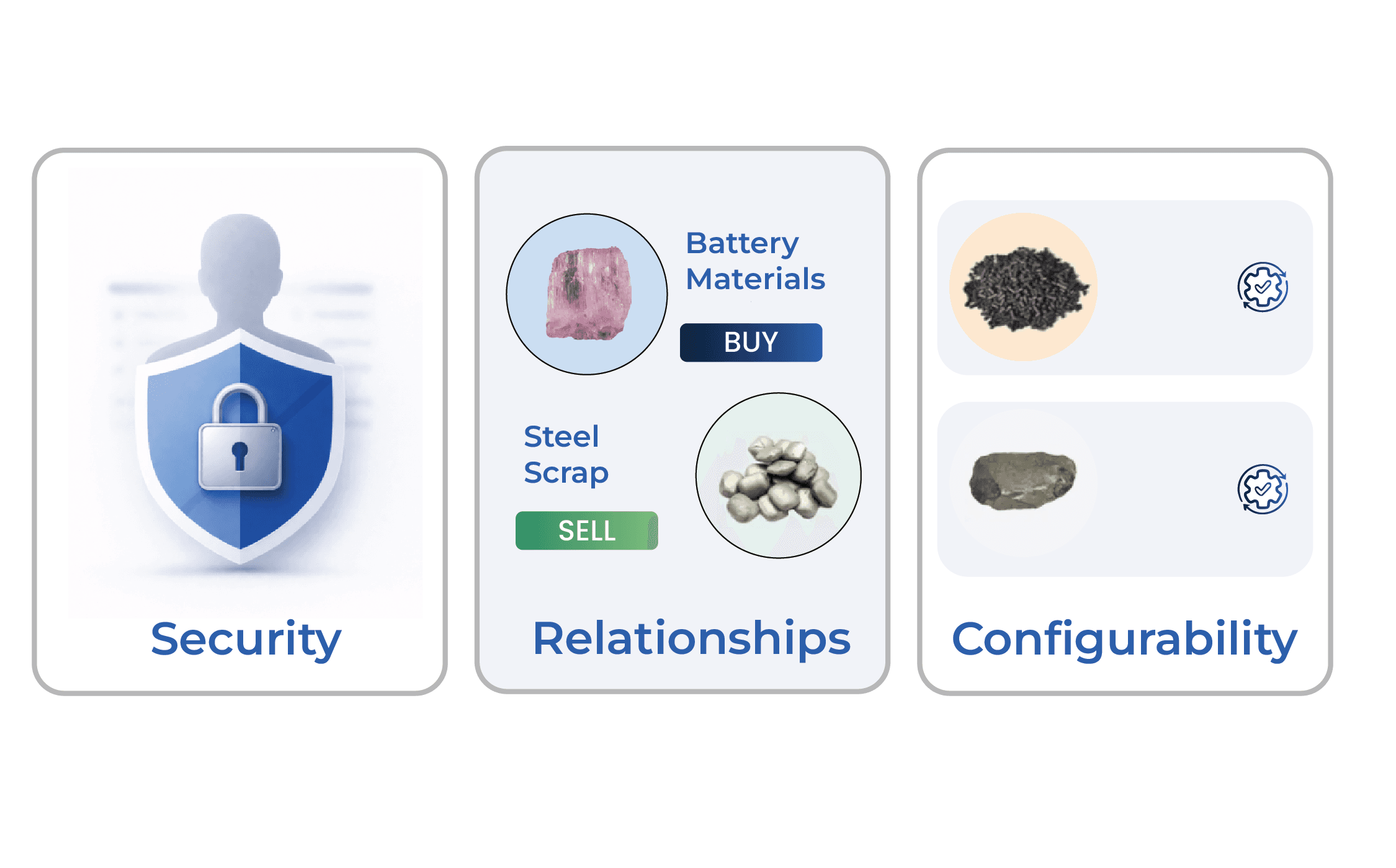
Relationship data is structured with downstream use in mind. Product and risk workflows are fully configurable per company. Legacy CRM and SRM data can be migrated with clear rules to preserve ownership and relevance. All relationship data is securely stored, access-controlled, and visible only to authorised users. Aggregated data may be used for analytics without exposing individual company relationships.
This foundation ensures that Relationships supports not only daily operations but also long-term reporting, audits, and strategic analysis.
Companies across the metals value chain already rely on Metalshub to structure and strengthen their counterparty relationships. Aperam highlights improved traceability, compliance, and transparency across its supplier relationships. Ebroacero points to faster sourcing, clearer communication, and stronger supplier engagement. BENTELER emphasises the role of structured relationship management in building a solid global supply base.
These outcomes reflect a common theme. A clear relationship structure enables better decisions.
Relationships is not a CRM add-on nor is it a static supplier list. It is a dedicated relationship management layer designed for the realities of raw materials markets.
By bringing ownership, product relevance, onboarding status, risk, contacts, and context into one workspace, Relationships supports procurement, sales, compliance, and analytics without fragmentation.
If you want to see how Relationships works in detail, explore the complete feature overview:

Newsletter