
Battery Raw Materials
Establishing a European Platform for Battery Raw Materials from Recycling
 Written byFrank Jackel
Published on
Share Post
Battery Raw Materials
Written byFrank Jackel
Published on
Share Post
Today, the European market for battery recycling raw materials is still at an early stage of development and remains illiquid and opaque. Limited transparency and the absence of widely accepted market reference prices make trading difficult and lead to volatility.
This uncertainty affects financing conditions, as banks tend to apply higher risk buffers to debt, and investors take a more cautious view on equity. As described in the World Economic Forum’s 2025 white paper on battery supply chain challenges, this may dampen valuations and increase the cost of raising capital for battery recyclers.
The lack of clear market signals and visibility makes it harder for governments to design and justify targeted support measures and provides limited incentives to further improve the regulatory framework.
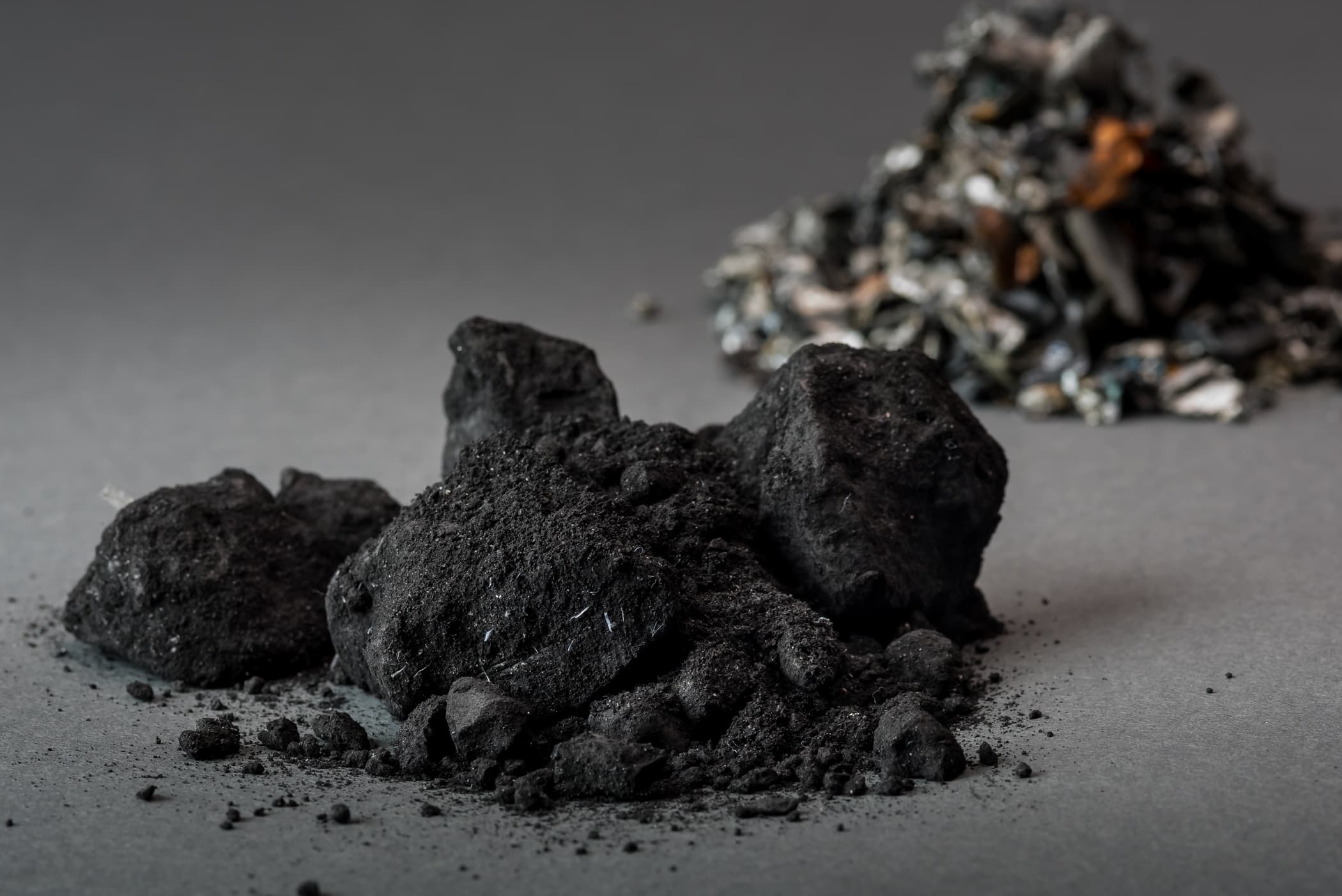
Black mass from shredded lithium-ion batteries (Credit: Argonne National Laboratory)
To enable a sustainable, profitable, and growing battery recycling industry, we must strive for a transparent, liquid, and efficient market for battery recycling raw materials.
In this target state, buyers and sellers should easily discover one another and transact across the entire battery recycling value chain with ease. Liquidity should be deep and continuous, with any enquiry to buy or sell receiving multiple, competitive offers leading to fair market prices.
Participation should be frictionless, with clear specifications and comparable quality definitions. New participants can enter easily, while established players can scale without friction. Participants should be able to trade any relevant battery recycling material at any scale.
Transactions should be efficient, traceable, and digitally supported from initial discovery through settlement and delivery. Trust should be built into the market through verification, compliance checks, and transparent performance histories.
Prices should be formed through efficient price discovery and real market activity, thus reflecting supply, demand, and material quality in a transparent and reliable way. The market should reward quality, sustainability and reliability with fair and efficient pricing.
Regulatory requirements should be clearly understood, embedded into workflows, and seamlessly complied with by all participants. Administrative tasks related to regulatory compliance should be minimised, and regulatory hurdles should be lowered.
Cross-border trading needs to be efficient and straightforward, supported by harmonised documentation and auditable processes. As a result, the battery recycling raw material market functions as a mature market, supporting the sustainable growth of the global battery ecosystem.
Achieving this target state requires deliberate action across the battery recycling ecosystem. The first step is for companies to recognise the need for market transparency, efficiency, and liquidity.
These companies ought to become first movers and commit to shaping the market rather than waiting for it to mature on its own. By bringing initial volume and counterparties into a shared marketplace, they establish the foundation for liquidity and price discovery.
Early liquidity attracts attention and confidence. As credible trades occur transparently and efficiently, other market participants are incentivised to follow. Network effects accelerate adoption, increasing depth, breadth, and resilience of the market. What begins as a focused initiative becomes an industry reference point for trading battery recycling materials.
First movers will be rewarded by being able to co-shape the marketplace design and establish themselves as incumbents once network effects kick in. Through collaboration and leadership, the battery recycling market transitions from fragmentation to maturity, unlocking sustainable growth for all stakeholders.
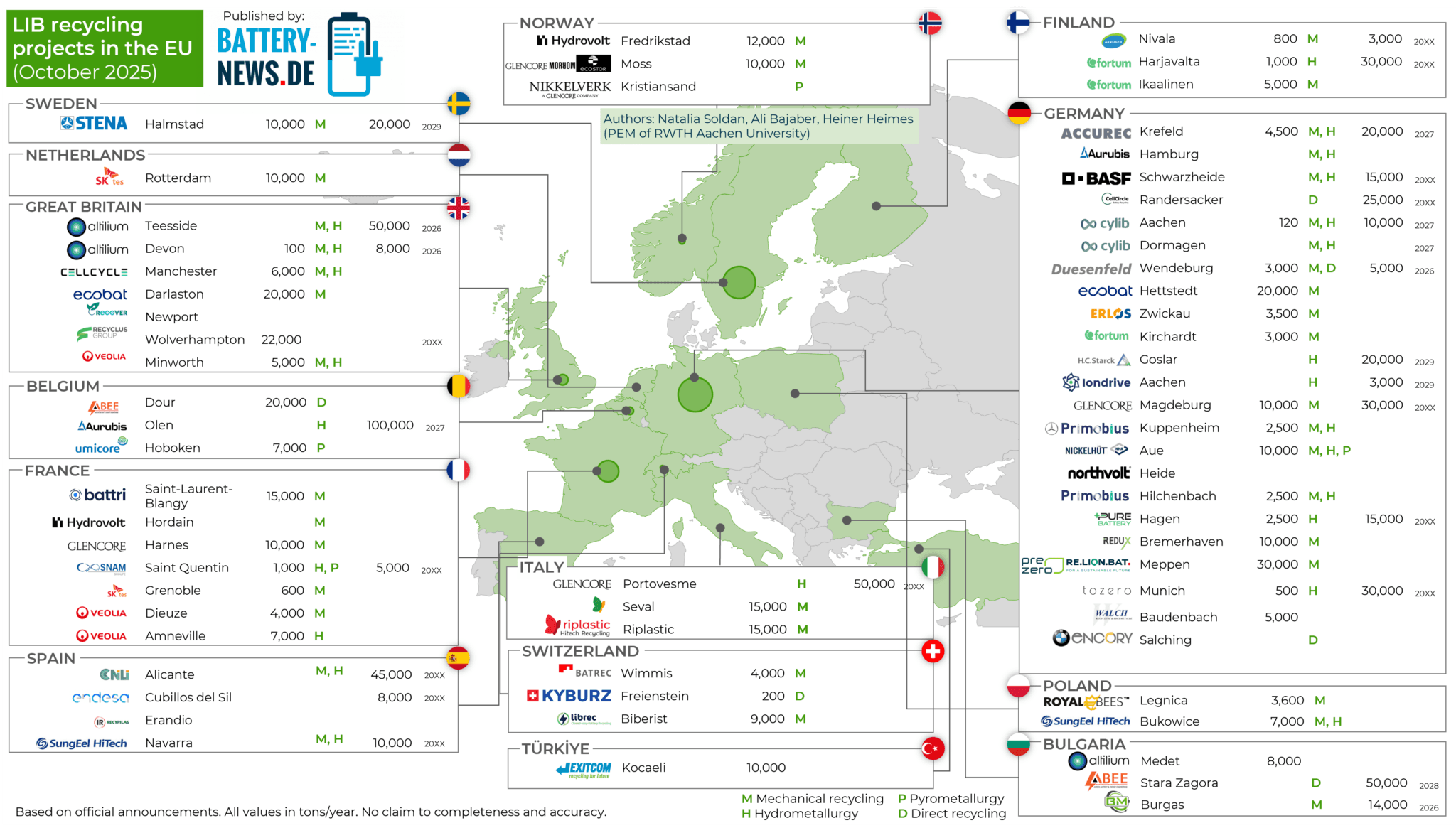
Battery Recycling Capacity in Europe Stronger Than Demand (Credit: Battery-News)
Metalshub proposes to act as the neutral, digital marketplace infrastructure to help the battery recycling raw material market mature.
We have repeatedly demonstrated our ability to build transparent, efficient, and liquid markets across iron & steel, industrial minerals, and battery metals. In these verticals, Metalshub has enabled standardised processes, real price discovery, and scalable liquidity by bringing together committed market participants on a shared digital platform.
Most notably, Metalshub has introduced spot market transparency and efficient price discovery into the lithium market by working with visionary first movers such as Albemarle, SQM, and Liontown. This experience is directly transferable to the battery recycling space.
In 2025, Metalshub tested the feasibility within the battery recycling industry by collaborating with Green Li-ion and Primobius. Together, we successfully concluded the first battery black mass and NCM (Nickel-Cobalt-Manganese) hydroxide transactions via Metalshub’s digital marketplace. These transactions demonstrated that compliant, efficient, and transparent trading of battery recycling materials is already possible today. Notably, both buyers and sellers involved confirmed a strong preference for the digital marketplace approach over the bilateral way of doing business today.
Based on these learnings, Metalshub now proposes to deliberately expand this initial liquidity and open the marketplace to additional battery recycling companies. Our objective is to help form the coalition of first movers needed to establish a functioning, liquid market.
To lower barriers to entry and accelerate adoption, Metalshub is willing to forgo its typical subscription-based fee model. Instead, we will invest more than one million euros in market development by charging only the enquiry publishing buyers or sellers a symbolic fee of 1,000 euros per year, while invited counterparties can quote free of charge for any enquiry.
Metalshub proposes to act as the neutral, digital marketplace infrastructure to help the battery recycling raw material market mature. As a result, it will invest more than one million euros in market development.
This investment reflects our conviction in the battery recycling industry and our belief that Europe needs a strong, independent market to address the challenges of opacity, illiquidity, and inefficiency that characterise young markets. Metalshub positions itself as neutral infrastructure, designed to serve the industry as a whole rather than any single participant.
We invite battery recyclers, traders, and downstream buyers to join this initiative and actively contribute liquidity to the marketplace. Once market participants commit to joining and bringing volume, onboarding for the go-live can be achieved in less than two weeks. Each participant will be supported by a dedicated Customer Success Manager with deep knowledge of the battery recycling space and direct experience from the initial black mass transactions concluded on Metalshub.
Metalshub has already proven that battery recycling transactions can be executed digitally, efficiently, and compliantly. More broadly, Metalshub has demonstrated its ability to build liquid, trusted markets that enable entire industries to evolve.
Now is the time for market participants to actively shape the future of battery recycling trading. Companies are invited to join the initial group of participants and bring liquidity to the marketplace. Interested parties should reach out to Chenyu or Frank to discuss participation and next steps.
Dr. Frank Jackel, Co-Founder and Managing Director, frank.jackel@metals-hub.com
Chenyu Zhao, Enterprise Account Executive, chenyu.zhao@metals-hub.com
Newsletter
insights

September 18, 2026
Read more

September 17, 2026
Read more


September 11, 2026
Read more